
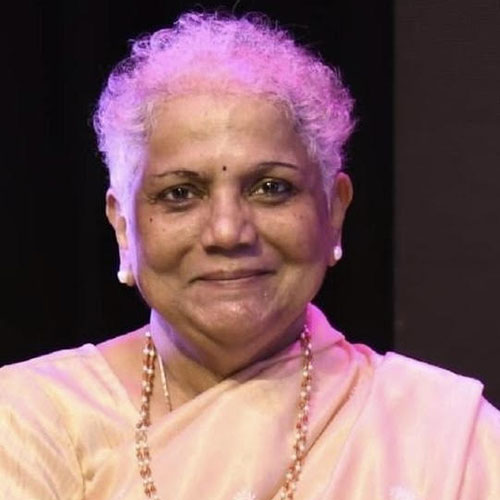
Vasundhara Raghavan
India
I remember the embarrassment my son, Aditya Raghavan, felt when he continued to bed-wet until he was 10 years old! As a mother, I took it as my personal failure to toilet-train him in his formative years. With full determination to put an end to the nightmare, we went to a senior urologist in 1991 to find a solution. He suggested that we wait for Aditya to attain puberty and set a date for a circumcision surgery. Thereafter, between the boy’s schooling, housework, and a full-time job, this topic was completely forgotten. But in November 1996, a nagging headache woke us from our slumber.
After an ophthalmologist found nothing amiss, we visited our family physician, who found the 15-year-old with high blood pressure. A blood test revealed a creatinine of 4.58 mg/dl. Understanding the seriousness, we were advised to meet Dr. Bhupendra Gandhi, a leading nephrologist.
After some tests and investigations, he was diagnosed with end-stage kidney disease due to vesicoureteral reflux. It was a delayed detection, one that we must accept and manage. This news deeply impacted the whole family. My husband took charge and explained the situation with fact-based information gathered online, even though we had limited access to the internet in those years. After discussing all aspects of kidney disease, we realized a kidney transplant was the best treatment.
I offered to be a donor. After a cross-match and HLA tissue typing, I was accepted to donate. In a few days, I was diagnosed with breast cancer. Treatment of cancer involved mastectomy, chemotherapy and radiation. In 1999, I was medically fit to donate my kidney.
Truth be told, we didn’t realize the magnitude of the disease.
Those were times when patients were not privy to medical information beyond what was relevant to managing the condition. Patients living with a kidney disease lived on a knife-edge, uncertain of their survival. In 1996, without scientific information on renal diet, I felt challenged to restrict my son’s dietary intake. In 2017, I could visualize better kidney care through well-researched dietary advice documented by clinical nutritionists.