
September 2026 Edition

Impact Factor 2025
Refining kidney diagnosis and treatment
From careful interpretation of kidney function measures in autosomal dominant polycystic kidney disease to pre-emptive treatment in lupus nephritis, a selection of articles from Kidney International® highlight how researchers are questioning broad or traditional approaches and moving toward more targeted decision-making.
Across a selection from Kidney International Reports®, researchers explore how imaging, histopathology, biomarkers, and genomic testing can support more individualized approaches to diagnosis, risk assessment, and treatment.

 |
KIDNEY INTERNATIONAL ARTICLES |
Intragraft clonal expansion of cytotoxic CD8⁺ and CD4⁺ T cells in antibody-mediated kidney transplant rejection
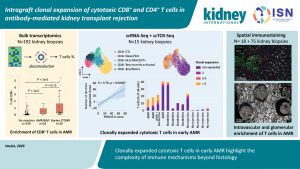
Vaulet et al. challenge the traditional separation of antibody-mediated rejection (AMR) and T cell-mediated rejection (TCMR) in kidney transplantation. Using single-cell sequencing and spatial imaging, they identified clonally expanded cytotoxic CD8 and CD4 T cells within biopsies classified as AMR, including cases without histological evidence of TCMR.
Clonal expansion correlated with donor-recipient tissue mismatch, supporting a donor-specific rather than infection-related response, while spatial analysis localized these T cells to the microvasculature and glomeruli typically affected in AMR.
These findings suggest that T cells may contribute directly to tissue injury conventionally attributed to antibodies alone and support a more tissue-based molecular classification of rejection. However, the study is descriptive and includes relatively few AMR biopsies, so it establishes biological plausibility rather than causality.
Genetic testing in kidney transplantation and living kidney donor risk assessment
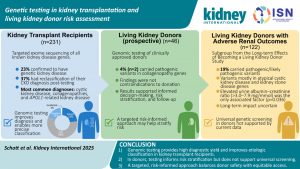 Genetic testing using exome sequencing of 409 CKD-associated genes was evaluated in kidney transplant recipients and living kidney donors.
Pathogenic or likely pathogenic variants were identified in 23% of transplant recipients, most commonly involving genes associated with glomerular and cystic diseases, and genetic findings led to reclassification of the underlying kidney disease in 37% of recipients with a molecular diagnosis. Such variants were also detected in 4% of prospective living kidney donors and in 19% of donors who subsequently developed adverse kidney outcomes.
These findings highlight the potential value of genetic testing in clarifying the cause of kidney disease in transplant recipients and improving risk assessment in living donors. However, the relatively low diagnostic yield among asymptomatic prospective donors suggests that targeted testing of individuals with higher clinical or familial risk may be more informative than universal screening. A precision-based approach could therefore improve both recipient diagnosis and donor selection.
A three-year randomized, double-blind, placebo-controlled study of lanreotide in stage 2/3 autosomal dominant polycystic kidney disease
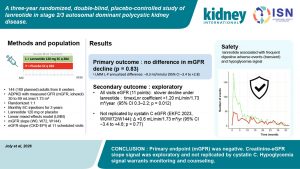 Joly and colleagues evaluated monthly injections of lanreotide 120 mg for three years in 144 adults with stage 2–3 autosomal dominant polycystic kidney disease (ADPKD).
The trial did not meet its primary endpoint: lanreotide did not significantly slow the decline in measured glomerular filtration rate (GFR) by iohexol clearance compared with placebo.
Although creatinine-based estimated GFR (eGFR) suggested a modest treatment effect, cystatin C-based eGFR and urinary creatinine clearance did not support it, raising the possibility that the apparent benefit reflected an effect on creatinine metabolism or handling rather than true preservation of kidney function.
Kidney-related clinical events and quality of life were similar between groups. Gastrointestinal adverse effects were more frequent with lanreotide, as was hypoglycemia.
Overall, these findings do not support lanreotide for preservation of kidney function in ADPKD and underscore the limitations of relying solely on creatinine-based eGFR when evaluating treatment effects.
A prospective multicenter randomized controlled trial pre-emptive increase in immunosuppression for asymptomatic serological reactivation in patients with lupus nephritis in clinical remission
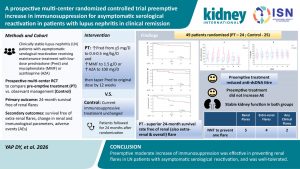 Yap et al. addressed whether immunosuppression should be intensified in patients with clinically quiescent lupus nephritis (LN) who develop serological evidence of reactivation.
In this prospective multicenter randomized controlled trial, patients receiving maintenance therapy were assigned to either temporary escalation of prednisolone together with mycophenolate or azathioprine, or continued observation. Over 24 months, no kidney flares occurred in the pre-emptive treatment group compared with 20.8% in the control group, with significantly better overall disease-free survival and no significant increase in severe adverse events.
These findings challenge the conventional strategy of observation alone in clinically stable patients with recurrent serological activity. A targeted, temporary increase in immunosuppression may reduce the risk of subsequent kidney flares in appropriately selected patients and provide a framework for a more proactive approach to LN management.
Finding the etiology of membranoproliferative glomerulonephritis
This educational review emphasizes that membranoproliferative glomerulonephritis (MPGN) is a light-microscopy pattern rather than a final etiologic diagnosis.
Sethi proposes a practical diagnostic approach incorporating complete immunofluorescence, electron microscopy, and selected ancillary tests such as pronase IF/IgG subclasses, C4d, DNAJB9, and ApoE. C4d may provide supportive information but should not be used as a stand-alone diagnostic test.
Complement-targeted therapies may benefit IC-MPGN and C3G, although current evidence is stronger for reducing proteinuria than preserving kidney function. Accurate etiologic classification remains essential because infection-directed, autoimmune, or other specific treatments may be required.
Despite relying partly on expert experience rather than systematically evaluated diagnostic performance, this article provides a useful framework for moving beyond the traditional MPGN type I–III classification.
|
KIDNEY INTERNATIONAL REPORTS ARTICLES |

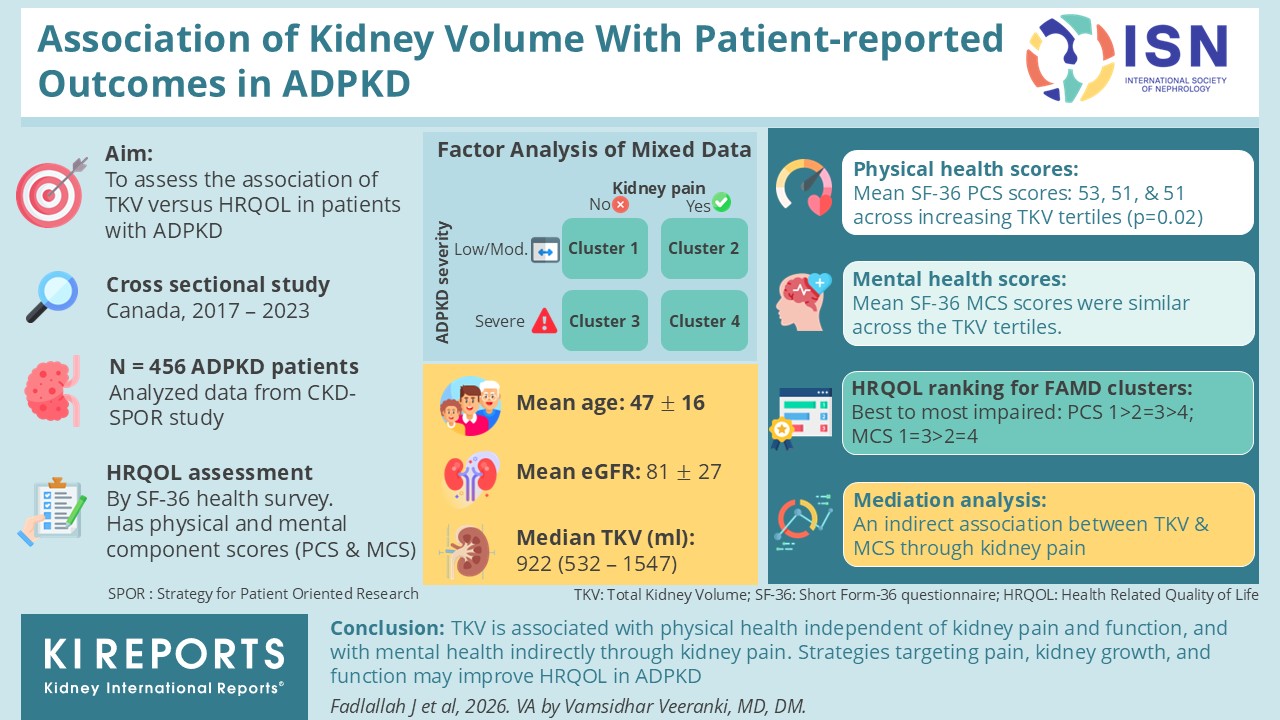
In 456 adults with autosomal dominant polycystic kidney disease (ADPKD), Fadlallah et al. found that larger kidney volume on magnetic resonance imaging was independently associated with worse physical wellbeing, particularly physical functioning and general health, even after adjustment for age, kidney function, and pain. Kidney size did not directly affect mental wellbeing; instead, much of this association was mediated through kidney pain.
Importantly, the relationship between kidney size and wellbeing was nonlinear: quality of life declined as kidney volume increased from small to moderate levels, then largely plateaued. This may help explain why therapies that slow kidney growth, such as tolvaptan, have not consistently improved quality-of-life measures in trials involving patients with already markedly enlarged kidneys.
The findings highlight kidney enlargement and pain as clinically meaningful aspects of ADPKD beyond their role as markers of disease progression. As a cross-sectional study, however, causality cannot be established.
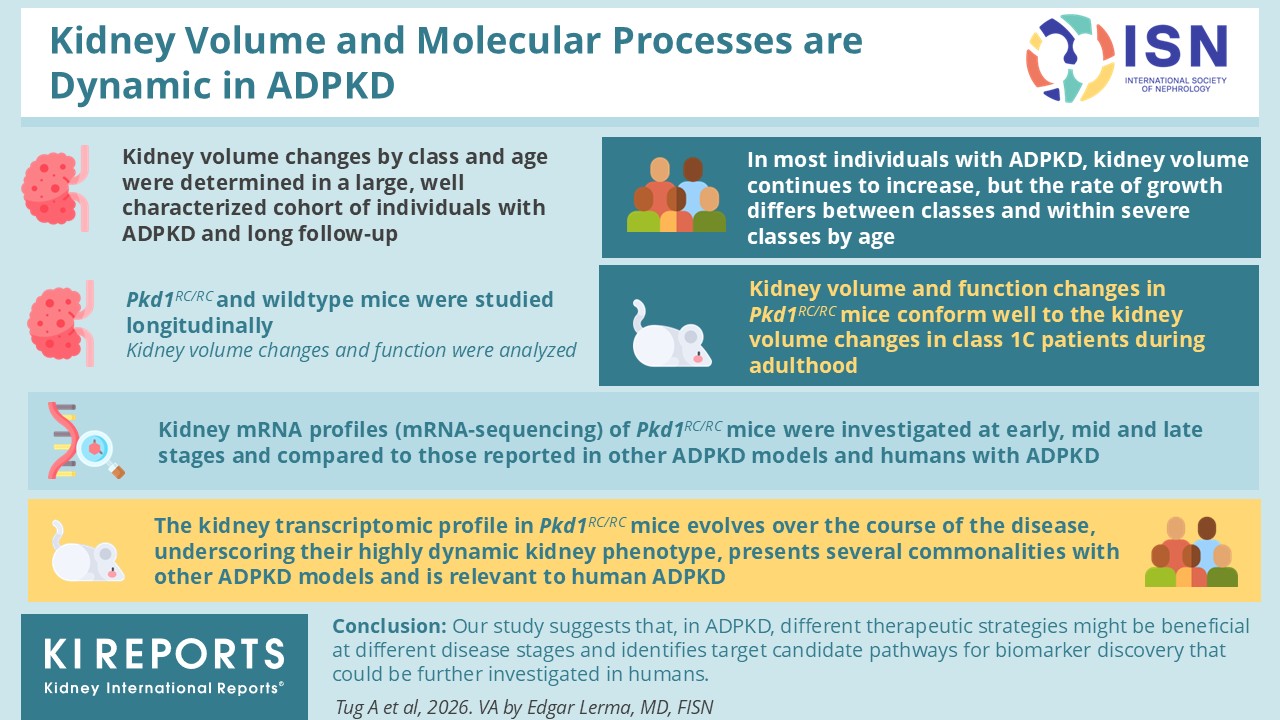
Tug et al. provide new insights into the dynamic nature of autosomal dominant polycystic kidney disease (ADPKD). By integrating long-term human data with findings from the slowly progressive Pkd1RC/RC mouse model, the investigators showed that total kidney volume growth decelerates with age, particularly in more severe Mayo Imaging Classes. The mouse model also reproduced patterns of kidney volume growth and kidney function decline similar to those observed in adults with Mayo Class 1C disease.
At the molecular level, early disease was characterized by increased cell proliferation, cyst expansion, and metabolic reprogramming, whereas mid-to-late disease showed increasing inflammation, epithelial-to-mesenchymal transition, and mitochondrial dysfunction.
These findings reinforce ADPKD as a biologically dynamic disease and highlight the potential value of stage-specific therapeutic targets and biomarkers that reflect its evolving pathophysiology.
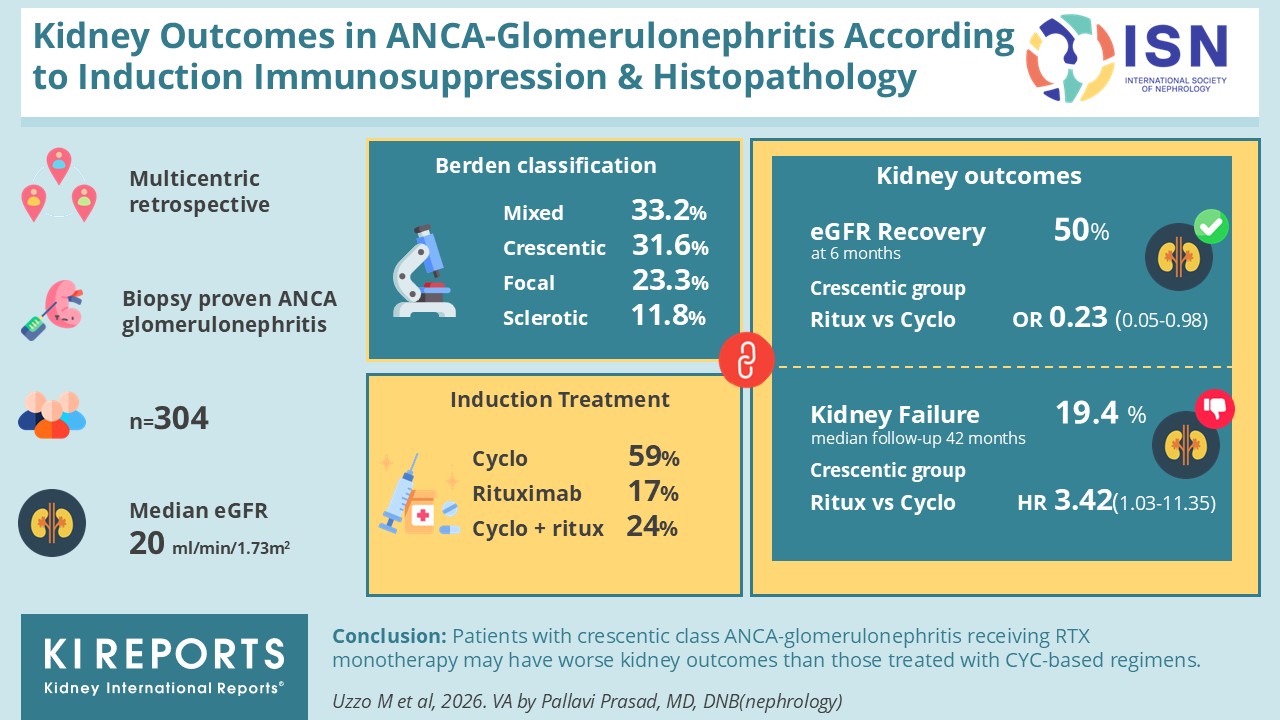
In this retrospective multicenter study, 304 patients with biopsy-proven antineutrophil cytoplasmic autoantibody (ANCA)-glomerulonephritis were classified according to the Berden histopathologic classification and evaluated according to induction therapy with cyclophosphamide (CYC), rituximab (RTX), or their combination.
Over a median follow-up of 42 months, 19.4% developed kidney failure and 50% recovered kidney function. In patients with crescentic-class disease, RTX monotherapy was associated with a higher risk of kidney failure compared with CYC, whereas no clear differences among induction regimens were observed in the other Berden classes.
These findings suggest that kidney histopathology may help refine treatment selection in ANCA-glomerulonephritis. In particular, combined CYC-RTX therapy may be a promising option in crescentic disease, potentially combining rapid disease control with reduced cumulative CYC exposure. Prospective studies are needed to determine whether integrating histopathology with clinical and non-invasive biomarkers can support more individualized induction strategies.
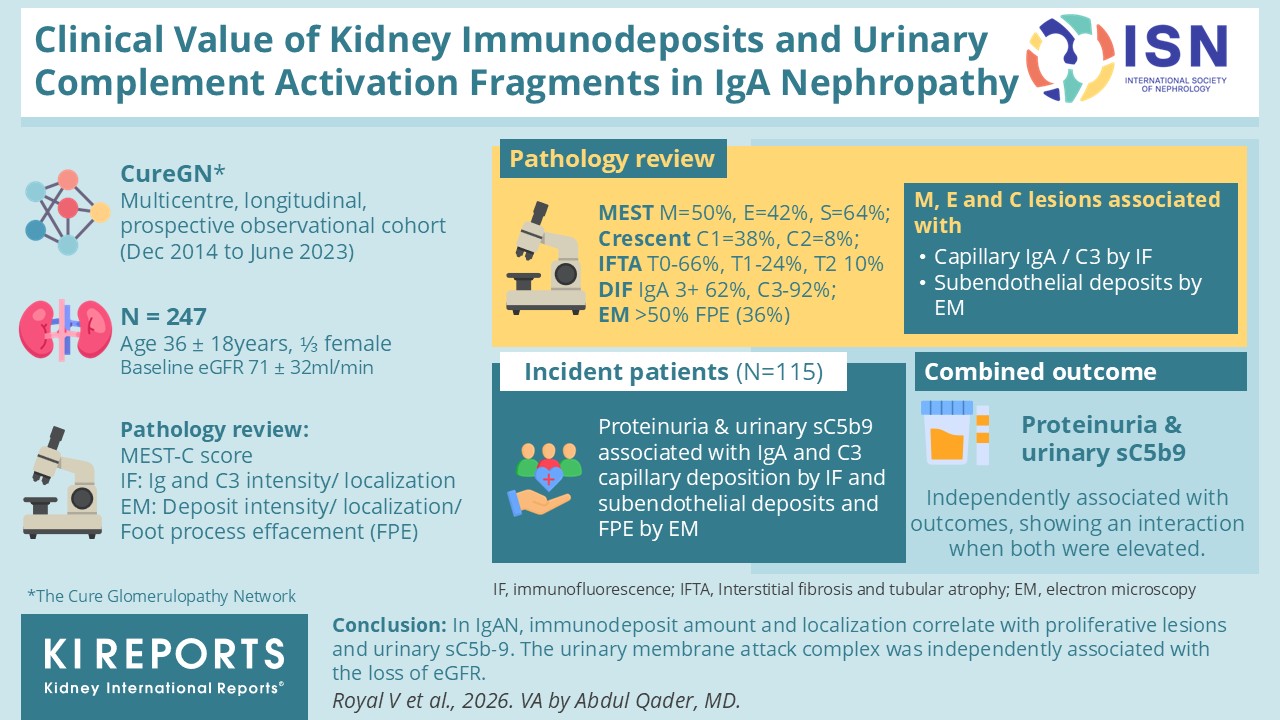
Royal and colleagues evaluated kidney immunodeposits and urinary soluble C5b-9 (sC5b-9) in 247 patients with IgA nephropathy from the CureGN cohort.
Greater IgA and C3 deposition, particularly in capillary and subendothelial locations, was associated with active histologic lesions and higher proteinuria. Urinary sC5b-9 levels correlated with capillary IgA/C3 deposition and subendothelial deposits, supporting its potential as a non-invasive marker of intrarenal complement activation. Over 6 years of follow-up, higher urinary sC5b-9 and proteinuria were independently associated with kidney failure or ≥40% decline in eGFR.
These findings further support the pathogenic relevance of complement activation in IgAN and suggest that urinary sC5b-9 could complement proteinuria and histopathology for risk stratification and, potentially, the future selection and monitoring of complement-targeted therapies.
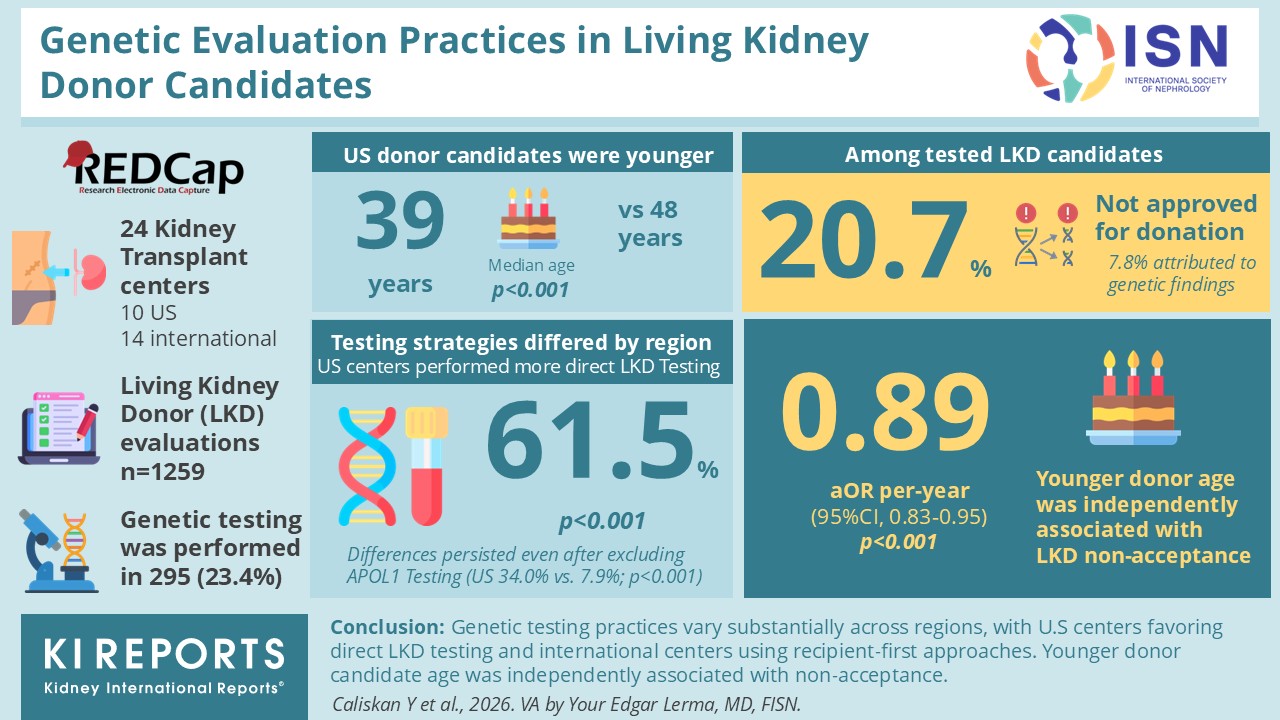
This cross-sectional registry analysis included 1,259 living kidney donor (LKD) evaluations from 24 centers in 10 countries. Genetic testing was performed in 295 evaluations (23.4%), including 188 using a recipient-first approach and 107 with direct donor testing. Genetic findings contributed to donor nonacceptance in 23 cases.
Interpretation should be cautious because the Living Donor Genetic Registry is a selected, non-population-based registry enriched for suspected genetic disease; therefore, the 23.4% testing rate does not represent prevalence across all LKD evaluations.
Additional limitations include its cross-sectional design, center heterogeneity, and potential selection and data-entry bias. The study’s main contribution is demonstrating substantial variability in how genetic information is incorporated into donor selection and highlighting the risks of testing unaffected donors before identifying the recipient’s disease-causing variant.
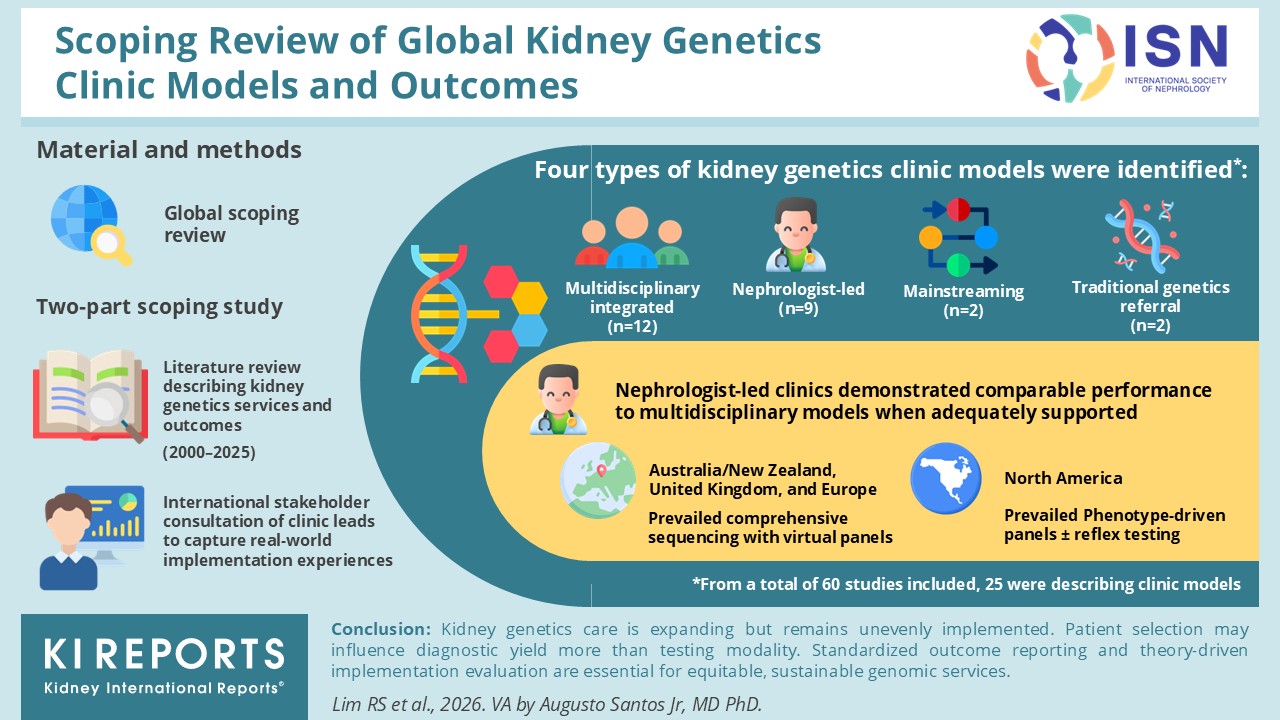
Genomic testing has transformed kidney disease diagnosis, but implementation of kidney genetics services remains variable worldwide. This global scoping review combined a literature review (2000–2025) with an international consultation of clinic leads to assess service models and real-world implementation.
Among 60 studies, most were from North America (n=23). Four service models were identified: multidisciplinary integrated clinics (n=12), nephrologist-led clinics (n=9), mainstreaming (n=2), and traditional genetics referral (n=2).
Nephrologist-led models appeared comparably effective when supported by adequate training, infrastructure, and governance. Multidisciplinary models predominated in Australia/New Zealand and Europe, while nephrologist-led models were more common in North America and Asia. Testing strategies also varied by region and resource availability, with comprehensive sequencing more frequent in Australia/New Zealand, the UK/Ireland, and Europe, and phenotype-driven panels more common in North America.