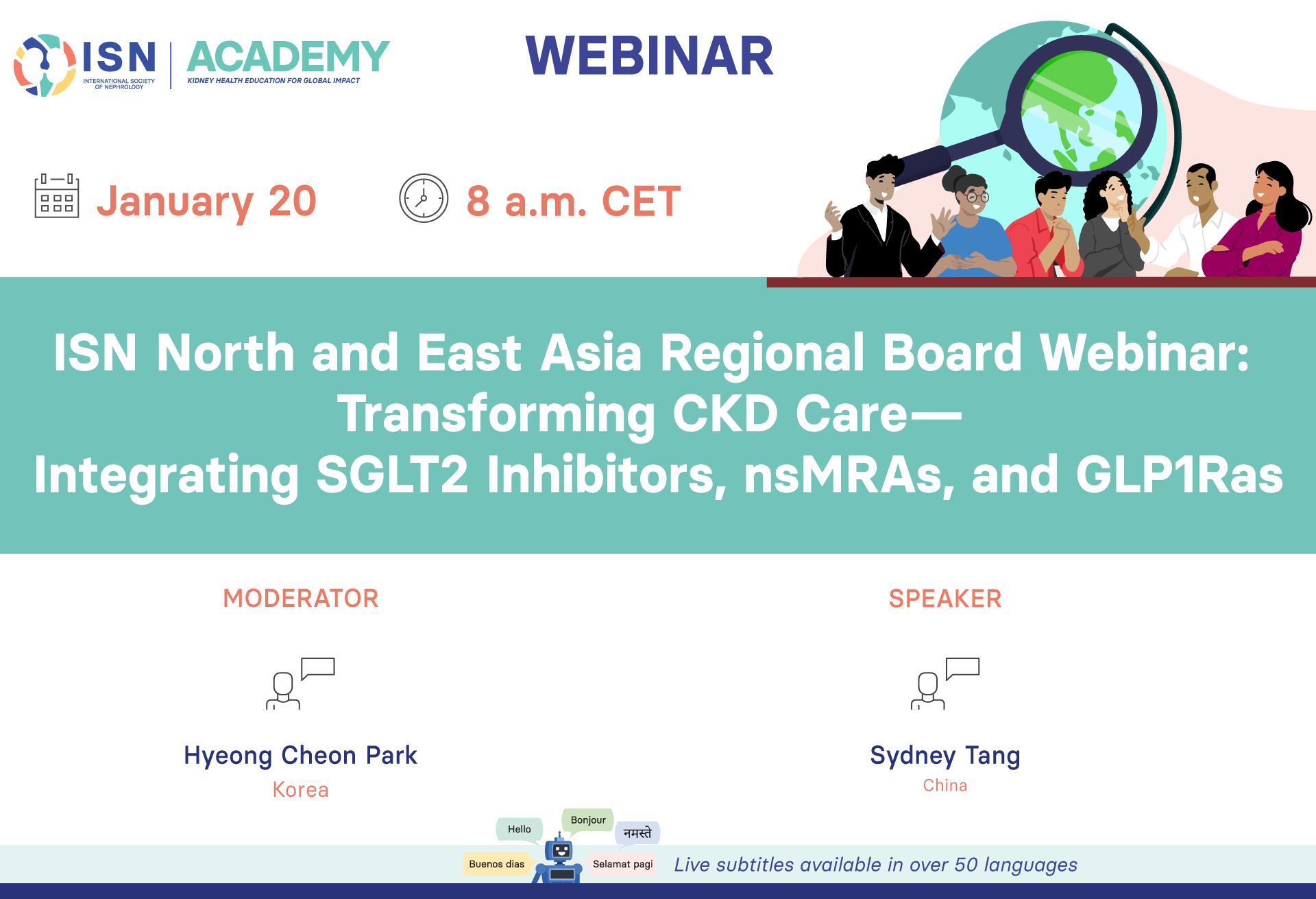
ISN North and East Asia Regional Board Webinar: Transforming CKD Care: Integrating SGLT2 Inhibitors, nsMRAs, and GLP1Ras
- 8 AM CET
In recent years, the therapeutic landscape of CKD has transformed profoundly. Once considered a condition with limited treatment options beyond renin-angiotensin system inhibition and dialysis, CKD management has now entered an era characterized by multiple evidence-based pharmacologic interventions with proven kidney- and cardioprotective effects. Landmark clinical trials have demonstrated that sodium–glucose cotransporter 2 (SGLT2) inhibitors not only improve glycemic control but also significantly slow CKD progression, reduce hospitalization for heart failure, and improve survival in diabetic and non-diabetic populations. In DKD, the non-steroidal mineralocorticoid receptor antagonist (nsMRA) finerenone has emerged as an important therapy for reducing albuminuria and improving cardiorenal outcomes, complementing the effects of SGLT2 inhibitors. In addition, the FLOW trial provided robust evidence that the glucagon-like peptide-1 receptor agonist (GLP1RA) semaglutide confers kidney protection in patients with type 2 diabetes and CKD. Taken together, these agents are reshaping treatment algorithms by providing clinicians with multiple evidence-based options that target the complementary pathways.
In addition to these established therapies, a broad pipeline of novel agents is currently under clinical investigation. These include endothelin receptor antagonists, novel mineralocorticoid modulators, soluble guanylate cyclase activators, agents targeting inflammation and fibrosis, metabolic modulators such as nicotinamide adenine dinucleotide (NAD) precursors, and anti-senescence strategies. Collectively, these interventions are redefining CKD as a treatable condition with multiple entry points for intervention, thereby offering an unprecedented opportunity to personalize therapy.
However, the rapid expansion of treatment options has raised important clinical and scientific questions. Which patients benefit the most from specific agents? How should therapies be sequenced or combined to maximize kidney and cardiovascular protection while minimizing adverse events? What is the role of these agents in special populations, including the elderly, non-diabetic CKD patients, and those with comorbidities such as heart failure and obesity? Furthermore, how should clinicians integrate emerging therapies from ongoing trials once their efficacy and safety are established?
This webinar aims to provide a comprehensive overview of the evolving treatment paradigms for CKD. It highlights the latest clinical evidence on SGLT2 inhibitors, nsMRAs, and GLP1RAs, while also exploring promising investigational agents. The discussion emphasizes practical considerations, such as patient selection, biomarkers for treatment response, strategies for combination therapy, and management of side effects. Importantly, regional perspectives on implementation, including accessibility, cost-effectiveness, and guideline adaptation, will also be discussed to ensure global relevance and equity of care.
This webinar offers participants an evidence-based and clinically oriented framework for decision-making. Attendees will gain not only an updated understanding of therapeutic options but also practical guidance on tailoring treatments to individual patient profiles. This session will contribute to bridging the gap between rapidly advancing science and real-world clinical practice, ultimately aiming to improve outcomes for patients with CKD worldwide.
Learning objectives:
- Critically appraise the latest evidence on SGLT2 inhibitors, nsMRAs, and GLP1RAs in CKD, including their renal and cardiovascular benefits in diabetic and non-diabetic populations.
- Strategies for patient-centered therapy selection and sequencing should be developed, integrating comorbidities, biomarkers, and risk profiles into decision-making.
- Explore the future landscape of CKD therapy by reviewing ongoing clinical trials and investigational agents, and discuss how these innovations may reshape global practice
Moderator
Hyeong Cheon Park (Korea)
Speakers
Sydney Tang (China)