
What is CKDu?
CKDu or Chronic Kidney Disease of Unknown etiology/Uncertain cause is a type of chronic kidney disease that mainly affects marginalized agricultural communities in specific areas of the world where a large number of people develop an unexplained, deadly form of kidney disease (Figure 1/Distribution in the world).
Because the populations affected are some of the world’s poorest and are exposed to a high degree of occupational and environmental hazards, and because the disease is considered a ‘medical mystery,’ CKDu has received significant attention in scientific magazines and the media.
Currently, CKDu occurs chiefly in Sri Lanka and Central America, although additional hotspots are identified almost daily. In Central America, CKDu is also/predominantly referred to as Mesoamerican Nephropathy.
CKDu is a devastating and deadly phenomenon in affected regions:
Initial surveys conducted in Central America, demonstrate that up to 20-30% of adults in ‘endemic communities’ show a high prevalence of decreased kidney function of unknown origin, possibly of environmental or occupational origin[1].
In certain countries in Latin America, the issue has become a severe public health crisis. Hospitalizations for CKD in El Salvador increased by 50% between 2005 and 2012, making CKD the leading cause of hospitalization in the country. Nearly 1,500 of these hospitalized patients were under 19 years old (out of a total 40,000 hospitalized patients of all ages during the same period).
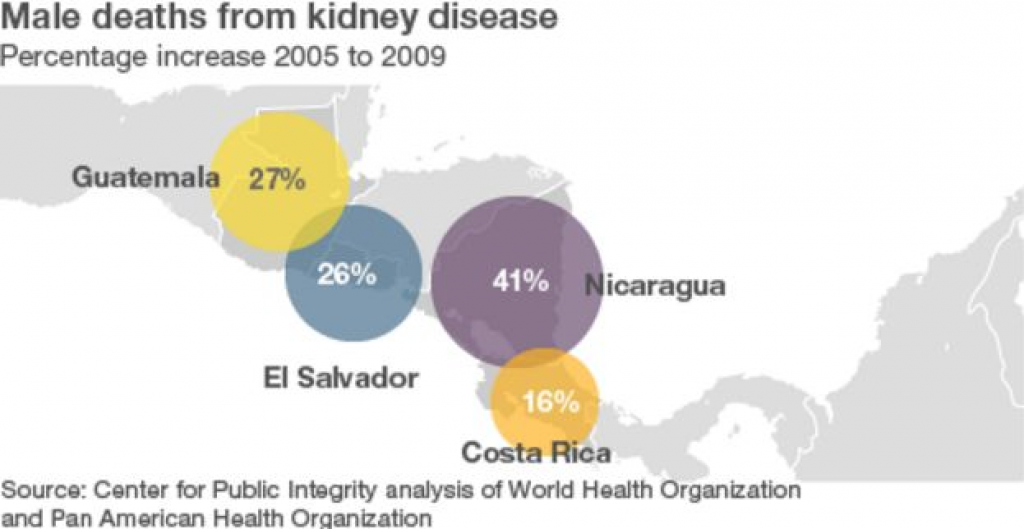
Figure 1. Male deaths from kidney disease
According to data from national transplant coordinators, nearly 3,100 patients currently receive dialysis in El Salvador due to CKDu, over 3,000 in Guatemala, 1,800 in Panama, and 1,000 in Nicaragua.[2]
[View Large Image]
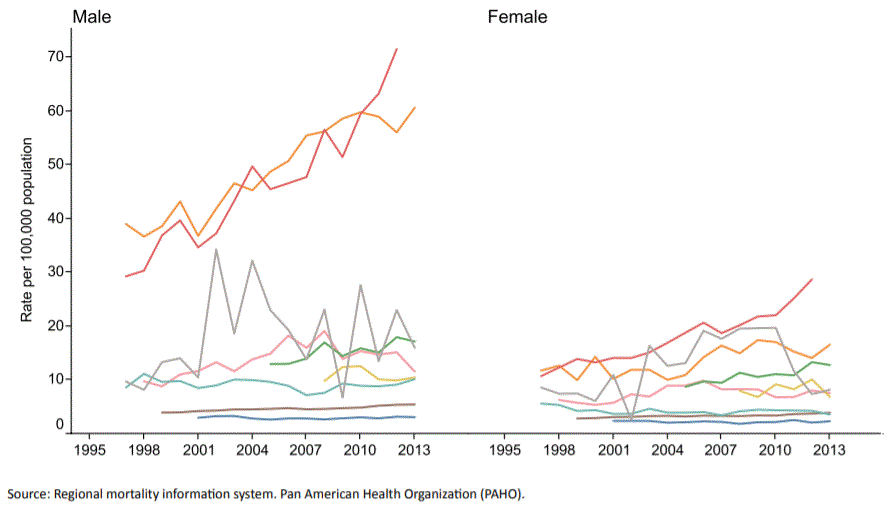
Figure 2. Chronic kidney disease age-standardized mortality rate trends in all ages population, by sex in Central American countries, from 1997 to 2013 is low
[View Large Image]
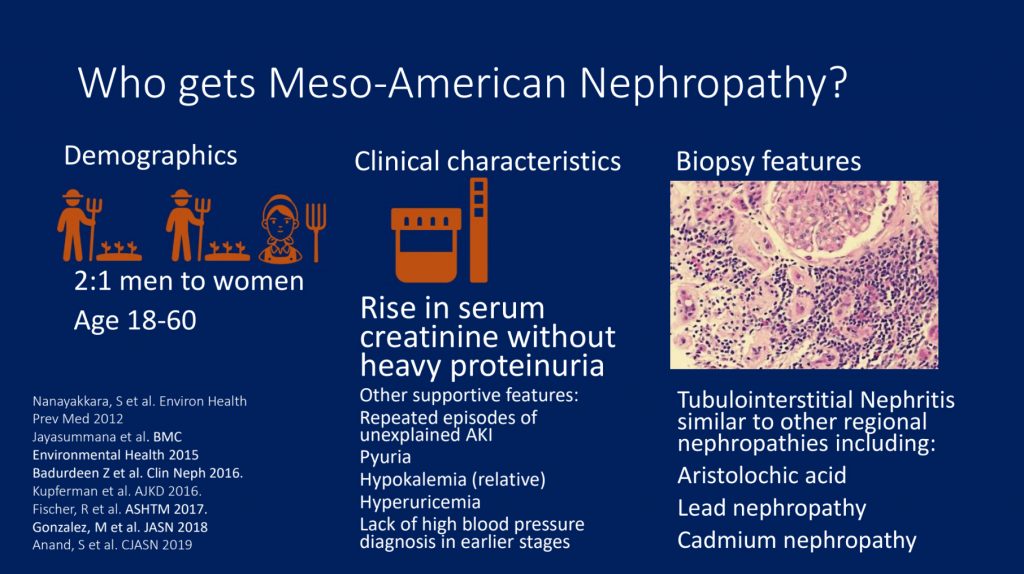
Most patients affected by CKDu are males between the ages of 20 and 60 who often live in rural or agricultural settings and may be exposed to extreme working conditions. Many experience a rapid loss of kidney function.
Figure 1. Proportion of men vs. women: Decline in eGFR
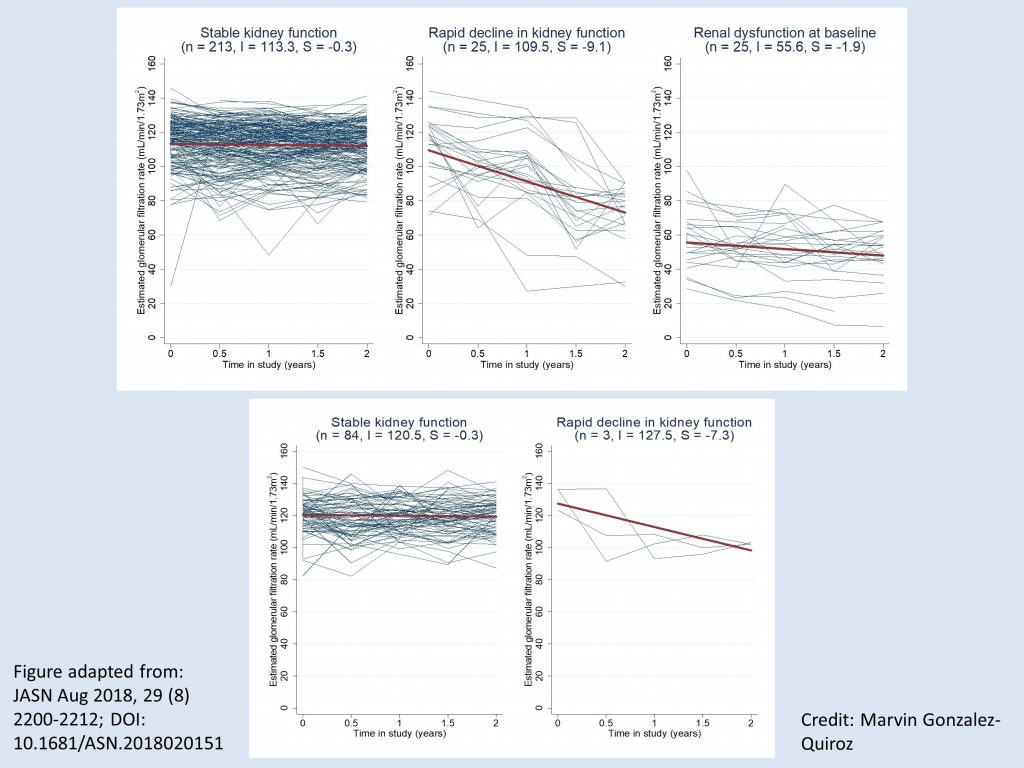
To quantify disease burden
Current evidence shows that CKDu affects many working-age adults in several geographic hotspots. However, the true prevalence, incidence, and population impact remain unclear because of limited surveillance and inconsistent case-detection methods (Anand et al., 2019; Caplin et al., 2019)
To gain insight into etiology
Despite almost three decades of research the specific cause/s for CKDu are yet to be identified, although multiple aetiological factors including an underlying genetic predisposition are proposed in the causal pathway of the disease. Coordinated epidemiologic, molecular and genetic research is needed to clarify mechanisms across regions.
To describe factors that impact progression
Longitudinal evidence describing predictors of CKDu progression, including clinical, environmental and biological factors, remains limited. Improved understanding of disease progression is essential for identifying high-risk individuals and informing early intervention strategies.
To test interventions
Few interventions have been rigorously evaluated in CKDu-affected communities. Substantial evidence gaps remain regarding the feasibility, effectiveness, and scalability of preventive, occupational, environmental, and health system based interventions.
To understand the experience of affected individuals and communities.
CKDu disproportionately impacts socially and economically vulnerable populations. Further research is required to document lived experiences, community priorities, ethical considerations, and the acceptability of research and interventions, including invasive procedures such as kidney biopsy.
Regional kidney epidemics have occurred throughout the world in the past (Figure 2). Balkan endemic nephropathy is perhaps the most prominent historical example. After it was first described in the early 1940s, Balkan nephropathy was linked decades later to Aristolochia clematitis, a weed growing in wheat fields that infiltrated the flour mix consumed by farming families living along the Danube river.
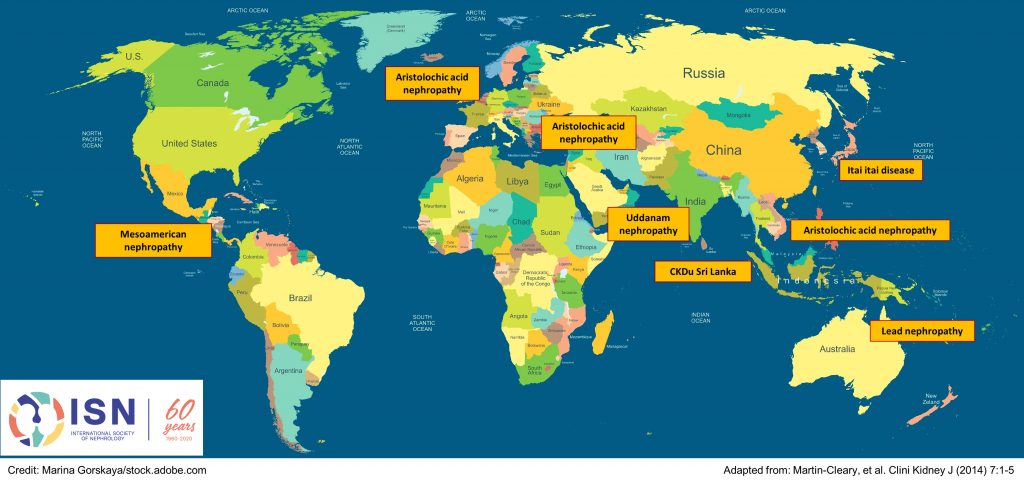
Figure 1. Regional nephropathies
[View Large Image]
[1] Cecilia Torres et al. (2019, October 9). Decreased Kidney Function of Unknown Cause in Nicaragua: A Community-Based Survey. Retrieved from https://www.sciencedirect.com/science/article/abs/pii/S027263860901587X
[2] (2019, October 9). Kidney disease of unknown causes in agricultural communities in Central America is declared a serious public health problem
https://www.paho.org/hq/index.php?option=com_content&view=article&id=9062:2013-kidney-disease-agricultural-communities-central-america-serious-public-health-problem&Itemid=1926&lang=en