
ISN Journal editorial selections on kidney stones, kidney health advocacy and sibeprenlimab for post-transplant IgAN
Kidney International®
Kidney stone disease – to drink or not to drink, that is the question
Increasing fluid intake is widely recommended to prevent kidney stone recurrence, but many patients struggle to maintain adequate hydration.
This editorial examines the PUSH trial, which tested interventions to increase fluid intake and achieve the recommended urine output of 2.5 liters per day. Despite modest increases in urine volume, the interventions did not significantly reduce kidney stone recurrence.
The authors emphasize that these findings do not undermine the benefits of hydration but highlight the limitations of behavioral interventions in achieving sufficient urine output.
Kidney International Reports®
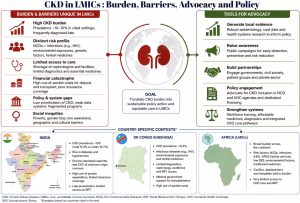
Advocacy for kidney health in low- and middle-income countries: from burden to policy action
Chronic kidney disease (CKD) is increasing in low- and middle-income countries, where limited resources, inadequate infrastructure, and high treatment costs restrict access to care.
This editorial examines these barriers and emphasizes the essential role of advocacy in driving policy action, proposing a practical framework to achieve this.
The authors call for better national data, stronger stakeholder collaboration, and the integration of kidney care into noncommunicable disease strategies and universal health coverage to improve access to affordable, equitable care.
Kidney International Case Reports™
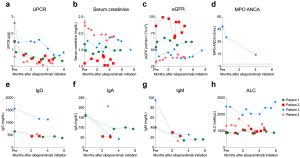
Changes in proteinuria, kidney function and other laboratory parameters following treatment with sibeprenlimab
IgA nephropathy (IgAN) can recur or develop after kidney transplantation, increasing the risk of graft loss, but evidence for newer targeted treatments in transplant recipients remains limited.
This case examined sibeprenlimab in four transplant recipients with recurrent or de novo IgA nephropathy with persistent proteinuria despite supportive treatment. All four showed substantial reductions in proteinuria, with no major short-term safety concerns.
The findings are promising, but larger studies are needed to establish the treatment’s safety and efficacy in transplant recipients.