
ISN Journal editorial selections on lanreotide, predicting high-risk CKD, and mitochondrial diseases
Kidney International®
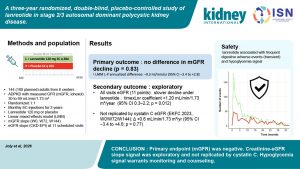
Somatostatin analogues can reduce cyst volume in autosomal dominant polycystic kidney disease (ADPKD), but their effect on kidney function remains uncertain.
This three-year randomized, placebo-controlled trial tested whether lanreotide could slow kidney function decline in adults with stage 2/3 ADPKD.
Lanreotide did not slow measured glomerular filtration rate decline, and kidney events and quality of life were similar between groups. Gastrointestinal side effects and hypoglycemia were more common with lanreotide.
Kidney International Reports®

Predicting high-risk CKD in Japanese people: model development and validation
Validated risk equations to identify people at high risk of chronic kidney disease (CKD) progression can be challenging to apply in primary care in Japan.
This study developed and validated a model using routinely available health-check data in Japan to predict progression to high-risk CKD within five years.
The model performed well and could support earlier risk assessment and management in primary care, although its applicability outside Japan remains uncertain.
Kidney International Case Reports™
Mitochondrial diseases can be difficult to recognize in people receiving dialysis because their symptoms overlap with other conditions and may affect multiple organ systems.
This case report describes two patients with longstanding unexplained symptoms who were diagnosed with mitochondrial encephalomyopathy, lactic acidosis, and stroke-like episodes through genetic testing in a dialysis center.
The cases highlight how nephrologists’ ongoing contact with dialysis patients can help identify multisystem diseases and prompt further diagnostic evaluation.