
ISN Journal editorial selections on dapagliflozin, Thailand’s CKD strategy, and misleading pseudocrescents in glomerulopathy
Kidney International®
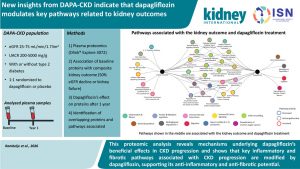
New insights from DAPA-CKD indicate that dapagliflozin modulates key pathways related to kidney outcomes
Dapagliflozin improves kidney outcomes in chronic kidney disease (CKD), but the mechanisms behind these benefits are not fully understood.
This DAPA-CKD proteomic analysis found that dapagliflozin modifies biological pathways linked to CKD progression, particularly those involving inflammation, fibrosis, and tissue remodeling.
The findings provide new insight into how dapagliflozin may help slow disease progression.
Kidney International Reports®
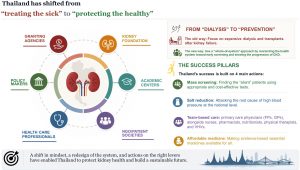
Thailand’s experience shows how kidney care can shift from a dialysis-focused model toward prevention, early detection, and integrated care.
Community screening, multidisciplinary care, sodium-reduction strategies, and wider access to disease-modifying therapies are central to this approach.
The editorial highlights practical lessons for other low- and middle-income countries seeking to reduce kidney failure while improving equity and sustainability.
Kidney International Case Reports™
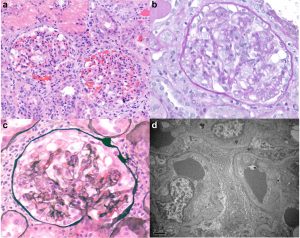
Kidney biopsy findings showing collapsing glomerulopathy with pseudocrescent formation, rather than true crescents, in a patient with an APOL1 G2/G2 genotype
Misleading pseudocrescents in collapsing glomerulopathy in a patient with APOL1 G2/G2
This case report describes a young man with acute parvovirus B19 infection and a high-risk APOL1 genotype who developed collapsing glomerulopathy that initially mimicked crescentic glomerulonephritis.
Definitive pathology identified pseudocrescents rather than true crescents. Despite treatment and clearance of the infection, kidney function continued to decline to kidney failure.
The case highlights an important diagnostic distinction and the aggressive course of APOL1-associated collapsing glomerulopathy.