ISN Advocacy Newsletter – Bridging the Gaps – February 2026
Ready for global advocacy events?
GCCH Webinar, WKD, WHA79 & more
Welcome to the first 2026 edition of Bridging the Gaps.
We begin the year with real momentum. Kidney health is now firmly embedded in global policy, following the adoption of the WHO kidney health resolution and the 2025 UN political declaration on noncommunicable diseases (NCDs). These exciting developments represent a clear inflection point for our community.
The ISN’s focus in 2026 is on implementation — translating these powerful but symbolic recognitions into concrete actions and keeping kidney health at the forefront of the global health agenda.
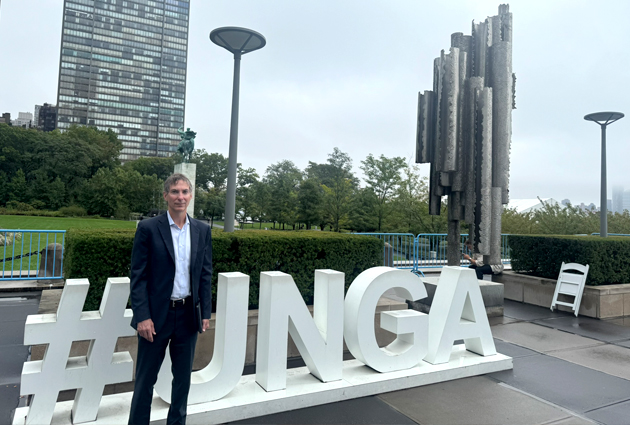
This edition highlights the ISN’s engagement at the highest levels, including our preparations for the Global Kidney Policy Forum at WCN’26 and a high-level side event at the World Health Assembly. ISN is also continuing to strengthen our partnerships across the circulatory health community. Two of our recent initiatives include a strategic memorandum of understanding with the International Diabetes Federation and a joint webinar with the Global Coalition for Circulatory Health on translating the 2025 UN political declaration into action. These efforts reinforce kidney health as an essential component of the global NCD agenda and of work to develop and expand universal health coverage.
I am so proud of what our Society has accomplished, but so much remains to be done. As we work to convert these aspirational commitments into real-world impact, your continued support is essential to advancing global kidney health. Together.
Warm regards,


Marcello Tonelli
ISN President
How can the UN political declaration commitments translate into real change for people living with circulatory conditions?
The 2025 United Nations political declaration on noncommunicable diseases (NCDs) sets out renewed global commitments to tackle premature deaths from cardiovascular disease, diabetes, kidney disease, and other NCDs.
Kidney disease is both a consequence and a driver of circulatory diseases, sharing risk factors, pathways, and health system solutions.
Unpack what the declaration actually means
On February 24 at 3 p.m., join the Global Coalition for Circulatory Health Webinar: Translating the 2025 UN political declaration commitments into action for circulatory health to explore what must happen at national levels for the declaration to translate into better health outcomes for your patients.
The webinar offers a global perspective for everyone working with noncommunicable diseases, featuring voices from government, global institutions, and patient organizations — including ISN President Marcello Tonelli, the presidents of the International Diabetes Federation, the World Heart Federation, and the International Alliance of Patients’ Organizations, as well as the Ministers of Health from Kenya and Barbados.
What does it take to move from policy commitments to real improvements in kidney care, and how can those lessons be applied across regions?
On March 28, 2026*, the Professor Donal O’Donoghue Global Kidney Policy Forum (PDOGKPF) will bring together policymakers, clinical leaders, and advocates to explore practical ways to strengthen kidney care systems in the ISN North and East Asia region, focusing on approaches that translate into measurable progress for patients.
Held at the WCN’26 in Yokohama, the 8th PDOGKPF comes at a critical moment. Following the adoption of the WHO kidney health resolution in May 2025, countries may now focus on how to implement commitments to improve access to prevention, early detection, treatment, and kidney transplant care. This session will highlight strategies that can inform action not only in the region but in health systems worldwide.
Guided by the theme “Bridging Policy and Practice for Kidney Health in North and East Asia,” participants will examine real-world policy experiences, discuss scalable kidney models, and share lessons that advocates, clinicians, and health leaders can adapt to their own contexts.
WCN’26 registered delegates may enter and join the forum using their congress badge. Non-delegates may register using this form, with places available on a first-come, first-served basis.
*The GKPF takes place from 11-1 p.m. JST.
Kidney health still receives far less attention than it deserves. Changing that requires visible, coordinated action that reaches communities, decision-makers, and health systems alike.
World Kidney Day (WKD) is designed to do exactly that. Now celebrating its 20th anniversary, WKD offers a powerful global platform for clinicians, researchers, advocates, patients, caregivers, and community leaders to raise awareness and push kidney health higher on national and global agendas. Every action, whether large or small, helps spark conversation, inform policy, and improve lives.
The year-long campaign builds toward a worldwide day of activities on March 12. This year’s theme, “Kidney health for all: Caring for People, protecting the planet,” highlights the close links between kidney health and environmental factors such as air pollution, heat exposure, and dehydration, while also drawing attention to the environmental footprint of kidney care itself.
Ways to get involved
- Organise a local WKD activity: Plan an event in your community and add it to the interactive map to inspire action worldwide
- Use the Activities Guide: Get practical step-by-step support to plan and run a successful WKD event.
- Share your story on the WKD blog: Add your voice to the WKD blog and help humanize kidney disease through lived and professional experience
- Amplify the campaign on social media: Use the 2026 Social Media Toolkit and join the #OurKidneysOurPlanet challenge to raise awareness
- Join the WKD 2026 webinar:Take part in the global discussion at 2 p.m. CET on March 4 with live subtitles in 50+ languages
- Download and share campaign resources: Use the 8 Golden Rules flyer and bookmarks in clinics, classrooms, and community settings
Every action counts! Join the movement and help make kidney health a global priority in 2026 and beyond.
Universal health coverage cannot be fully realized while millions of people lack access to affordable kidney care.
During the 79th World Health Assembly (WHA79) in May 2026, the ISN will convene a high-level side event focused on one of the most pressing gaps in UHC: Ensuring access to the full continuum of kidney care, from prevention and early detection to treatment and kidney replacement therapy.
The event will build on growing global momentum: Recent milestones, including the WHO kidney health resolution and the 2025 UN political declaration on noncommunicable diseases and mental health, have placed kidney disease firmly on the global health agenda. The question now is how these countries turn commitments into concrete policy and financial decisions. Participants will gain policy-relevant insights that can inform national planning, advocacy strategies, and health system reform.
In the build-up to the 2027 UN High-Level Meeting on UHC, this side event will highlight why investing in kidney health is essential to achieving SDG Target 3.8 and to developing resilient, equitable, and financially sustainable health systems that leave no one behind.
The side event will take place on Wednesday, May 20, from 8:30 to 9:30 a.m., in Geneva, Switzerland. Further details, including the agenda and registration link, will be shared soon.
Strong kidney health policies are more effective when they reflect the realities of people living with kidney disease. The ISN Patient Liaison Advisory Group (PLAG) helps ensure that patient experience directly informs advocacy, awareness campaigns, and global health dialogue.
At the ISN XSpace event marking World Diabetes Day, PLAG Chair Manvir Victor shared patient perspectives on diabetes and its impact on kidney health, highlighting why prevention and care strategies must be designed around patient needs.
During Universal Health Coverage (UHC) Day, PLAG member Vasundhara Raghavan contributed to an ISN XSpace discussion on equity and access, emphasizing how health systems can be designed and evaluated with patient needs and lived experience at the center.
The group’s role continues to evolve, and its commitment to amplifying the patient voice within ISN activities and global kidney health initiatives remains steadfast, with a refreshed visual element introduced to support this work.
Kidney health progress does not happen by accident; it is driven by thousands of volunteers worldwide who give their time, expertise, and leadership to advance care, shape policy, and amplify patient voices.
On December 5, the ISN marked International Volunteer Day, celebrating the members whose commitment powers the society’s work across regions and disciplines. From strengthening education and care delivery to advancing advocacy and policy change, ISN volunteers help drive the society’s mission forward, translating shared goals into sustained action for kidney care worldwide.
Their collective efforts have helped elevate kidney health on the global agenda, including contributing to landmark policy achievements such as the WHO kidney health resolution and the inclusion of kidney health in the UN political declaration on noncommunicable diseases and mental health.
Reflecting on this momentum, Advocacy Working Group Chair Ifeoma Ulasi noted:
“This year marks a historic milestone for kidney health advocacy. Through collective volunteer action, we have helped secure global commitments, and now our task is to turn these into real, integrated, and equitable kidney care.”
The ISN thanks all its volunteers for their dedication, leadership, and continued commitment to improving kidney health for all.
The ISN and the International Diabetes Federation (IDF) have signed a Memorandum of Understanding, formalizing a long-term collaboration to strengthen global action on diabetes-related kidney disease.
Diabetes is the leading cause of kidney disease, and together these conditions affect hundreds of millions of people worldwide. Recognizing their shared risk factors and growing global burden, the ISN and the IDF will work more closely across advocacy, education, scientific exchange, and public awareness to strengthen prevention, early detection, and care. This agreement marks an important step toward coordinated action on closely linked conditions, reflecting a shared commitment to reduce disease progression and premature mortality worldwide.
ISN President Marcello Tonelli stated: “Diabetes-related kidney disease is a major and growing global health challenge, particularly in low- and middle-income countries. We are delighted with this agreement, which strengthens our ongoing partnership with the IDF and will help the ISN to achieve its mission of ensuring that everyone, everywhere has equitable access to kidney health.”
As part of the agreement, the ISN and the IDF will collaborate on coordinated engagement for World Kidney Day and World Diabetes Day. The organizations also plan joint webinars, training initiatives, and scientific sessions at major congresses and global health events.
IDF President Peter Schwarz commented, “Diabetes is the leading cause of chronic kidney disease, yet this complication is too often detected late. By strengthening our collaboration with the ISN, we can help elevate kidney health within the global diabetes agenda and support more integrated approaches to care to improve the lives of people with diabetes.”
Through this partnership, the ISN and the IDF aim to strengthen global awareness of the link between diabetes and kidney disease, working together to improve outcomes for people worldwide.