
ISN Journal summaries on pegcetacoplan, AVF maturation failure, and primary hyperoxaluria type 1
Kidney International®
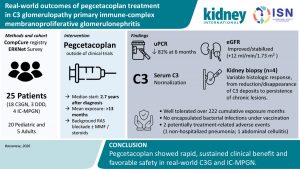
Real-world outcomes of pegcetacoplan in primary membranoproliferative glomerulonephritis
Pegcetacoplan is being explored as a treatment for C3 glomerulopathy and primary immune-complex membranoproliferative glomerulonephritis, but real-world evidence remains limited.
This observational study followed 25 pediatric and adult patients treated outside clinical trials, most of whom had not responded to conventional therapies.
Pegcetacoplan was associated with rapid and sustained reductions in proteinuria, stable or improved kidney function, normalization of serum C3, and good tolerability, supporting its potential as an effective option for complement-mediated kidney disease.
Kidney International Reports®
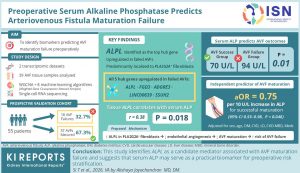
Preoperative serum alkaline phosphatase predicts arteriovenous fistula maturation failure
Arteriovenous fistula (AVF) maturation failure is a major challenge in hemodialysis, but reliable preoperative predictors are limited.
This study combined multiomics analysis with validation in 55 patients to identify molecular markers linked to AVF maturation failure.
Higher tissue-nonspecific alkaline phosphatase and preoperative serum alkaline phosphatase were associated with maturation failure, suggesting serum alkaline phosphatase could serve as a practical biomarker to help identify patients at higher risk before AVF creation.
Kidney International Case Reports™
Primary hyperoxaluria type 1 can be difficult to diagnose, and delayed recognition may lead to recurrent oxalate deposition and graft dysfunction after kidney transplantation.
This case report describes a 23-year-old woman diagnosed only after transplantation, when worsening graft function prompted genetic testing. Lumasiran reduced oxalate levels and stabilized transplant function for 18 months.
The case highlights the importance of considering genetic or metabolic causes of unexplained kidney failure. It suggests lumasiran may have a role as salvage therapy in selected adults diagnosed after transplantation.