ISN Journal summaries on electronic alerts for AKI in Wales and patient-choice dialysis policy reform in Thailand
Kidney International®
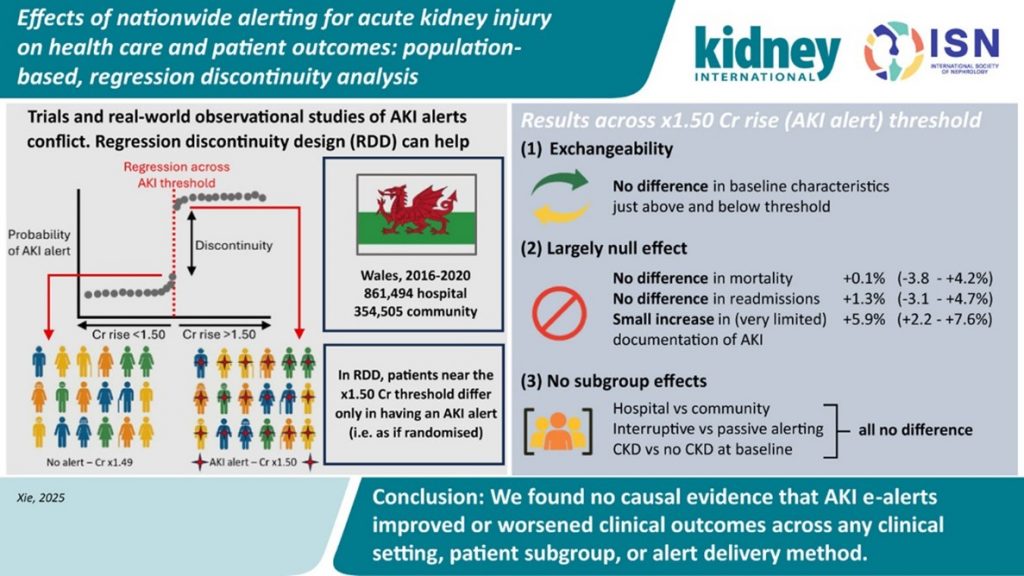
A population-based,regression discontinuity analysis examined the effects of nationwide alerting for acute kidney injury on health care and patient outcomes
This study assessed whether Wales’ nationwide electronic alerts for acute kidney injury (AKI) improved care or patient outcomes in real-world practice.
Using a population-based regression discontinuity analysis of hospital and community data from 2016 to 2020, the authors found that the alerts did not significantly change mortality, admissions, or readmissions. They did lead to a small increase in hospital AKI coding and only limited improvements in follow-up monitoring.
Overall, the findings suggest that alerts alone are not enough to improve outcomes without a stronger clinical response.
Kidney International Reports®
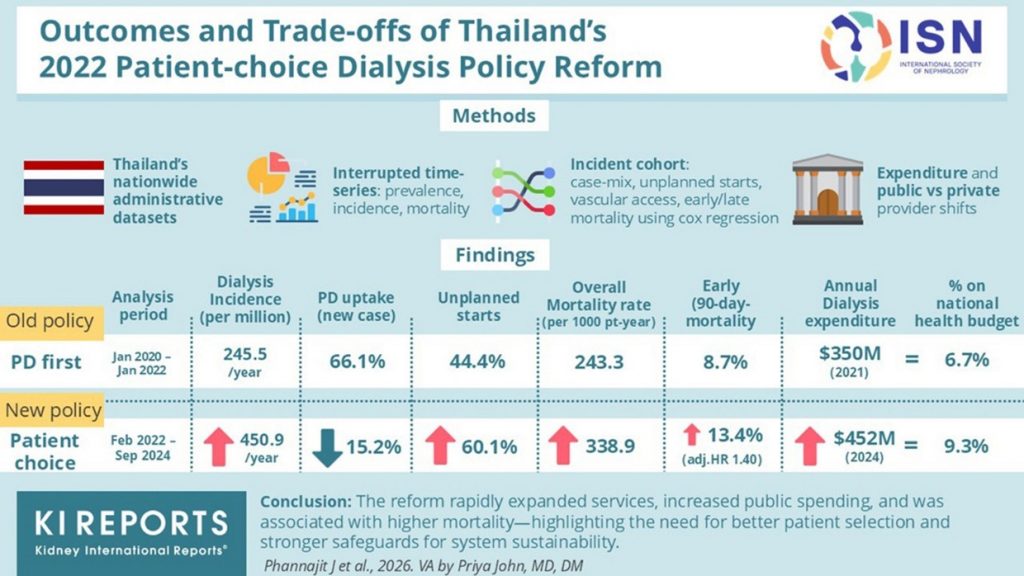
Outcomes and trade-offs of Thailand’s 2022 patient-choice dialysis policy reform
This study examined the impact of Thailand’s 2022 dialysis policy reform, which replaced a peritoneal dialysis-first approach with unrestricted patient choice, to see how it affected access, costs, care delivery, and outcomes.
Using linked nationwide administrative data from 2018 to 2024, the authors found that the reform led to a rapid shift toward hemodialysis, greater reliance on private providers, more unplanned dialysis starts, and sharply higher public spending. It was also associated with increased mortality, especially in the first 90 days after dialysis initiation.
Overall, the findings suggest that expanding choice without sufficient safeguards can strain the health system and worsen patient outcomes.