From ISN Fellowship to specialist glomerular disease care in Malaysia
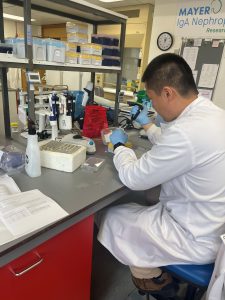
Dr. Chan performs an enzyme-linked immunosorbent assay in the Mayer IgA Nephropathy Laboratory at the University of Leicester
“The fellowship provides far more than clinical knowledge”
When Chee Eng Chan applied for an ISN Fellowship, his goal was to build the clinical expertise and confidence needed to improve care for patients with complex glomerular diseases in his home country, Malaysia.
During his ISN Fellowship in Leicester, UK, from October 2024 to September 2025, Dr. Chan gained focused clinical, research, and laboratory experience in glomerular disease under the supervision of Jonathan Barratt and Chee Kay Cheung. Since returning home, he has begun translating that experience into practice. We caught up with Dr. Chan to learn how the fellowship helped turn his specialist training into meaningful progress for glomerular disease care in Malaysia.
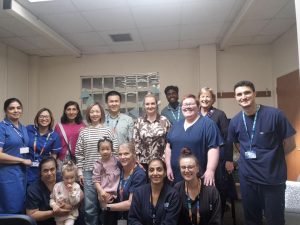
Dr. Chan (fifth from back left) with members of the Leicester Renal Research Unit at Leicester General Hospital
Before your ISN Fellowship, what need or gap in glomerular disease care did you hope to address at your home center?
At the time, there was no dedicated glomerular disease clinic, and specialist support was limited.These complex conditions require expertise for accurate diagnosis, meticulous management, and long-term follow-up. In addition, the field of glomerular disease is rapidly evolving, with major advances in understanding the disease, developing treatment strategies, and advancing novel therapies.
What part of the fellowship most changed your confidence, skills, or approach to managing patients with glomerular diseases?
The most transformative aspect of the fellowship was the opportunity to work within a dedicated glomerular disease team under the mentorship of leading experts, including Professor Barratt and Dr. Cheung. The fellowship provided a true bench-to-bedside experience, combining hands-on laboratory research, running specialized glomerular disease clinics, and participating in multiple clinical trials.
Dr. Chan with Dr. Cheung (left)
Regular participation in renal pathology meetings and multidisciplinary team discussions significantly strengthened my confidence in diagnosing and managing complex glomerular diseases, interpreting kidney biopsy findings in the clinical context, and making evidence-based treatment decisions. Equally valuable was learning the importance of a structured, patient-centered approach that integrates clinical care, research, education, and long-term follow-up.
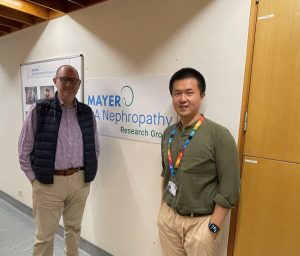
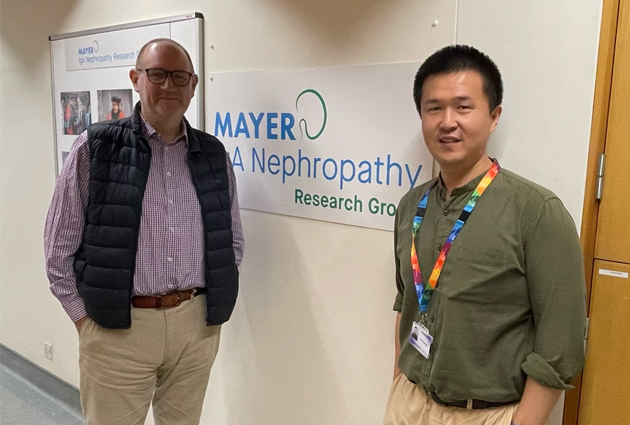
Dr. Chan with Professor Barratt (left)
Another highlight of the fellowship was the opportunity to attend glomerular disease meetings and conferences across the UK and Europe, including several investigator meetings, an ISN Primer Course in Glomerular Diseases, and ISN International Expert Forums on Complement Therapeutics in C3G and IgA Nephropathy and B-cell targeting in Glomerular Diseases. These experiences allowed me to learn from experts in the field, exchange ideas with colleagues from different countries, gain insight into emerging developments, and build valuable professional connections.
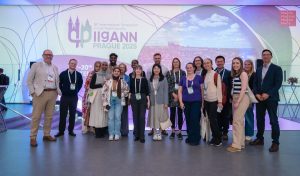
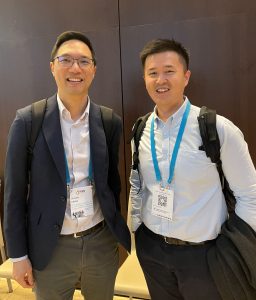
Faculty and delegates at the 18th International Symposium on IgA Nephropathy in Prague
Overall, the fellowship broadened my perspective on glomerular disease care and helped me develop a more comprehensive approach to managing patients. It also gave me the confidence and experience to contribute to the development of glomerular disease services in Malaysia.
Since returning home, how have you translated your fellowship experience into practice?
I have established a dedicated glomerular disease clinic at Hospital Tengku Ampuan Afzan, the public hospital where I currently work. The clinic provides focused care for patients with a wide range of glomerular diseases, from relatively straightforward cases to complex and rare conditions.
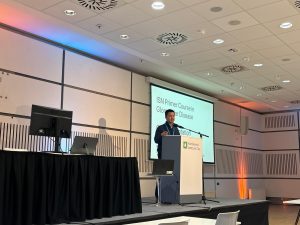
Dr. Chan presents a case at the ISN Primer Course in Glomerular Diseases in Prague, Czech Republic, in 2025
One of my main goals has been to develop a more structured approach to glomerular disease care. This includes introducing standardized assessment pathways, working more closely with multidisciplinary teams, making greater use of genetic and specialized testing where appropriate, and identifying suitable patients for clinical trials. I have also been sharing the knowledge and experience gained during the fellowship with colleagues and discussing challenging cases with nephrologists from other centers.
What would you say to nephrologists considering an ISN Fellowship in glomerular disease?
I would strongly encourage them to apply. The fellowship provides far more than clinical knowledge. It offers mentorship, international collaboration, research opportunities, and exposure to different healthcare systems. The experience can be truly transformative, equipping fellows with the skills, confidence, and professional network needed to drive meaningful improvements in patient care when they return to their home institutions.
Interested in strengthening glomerular disease care in your region? Apply for an ISN Fellowship specializing in glomerular diseases.