Fresh perspectives for the ISN YNC: Meet the new members
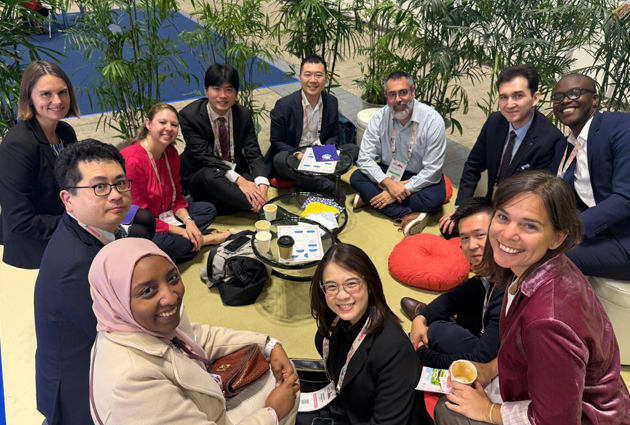
The ISN values the perspectives and contributions of its younger members and supports them as they develop into the next generation of global kidney health leaders. The ISN Young Nephrologists Committee (ISN YNC) is a key part of this commitment, bringing together early-career professionals from around the world to contribute to ISN activities and develop their networks, skills, and leadership experience.
For 2026–28, eight new members have joined the committee, bringing diverse regional perspectives, expertise, and ideas. Meet them and discover what they hope to contribute to the YNC.
Not yet part of the ISN community? Join or renew your membership to connect with colleagues worldwide and explore opportunities to get involved.

Abinet Mathias Aklilu
Assistant professor of medicine, Yale School of Medicine, United States.
Can you tell us about your work in kidney care?
My work has a strong clinical research focus, including leading investigator-initiated trials and contributing to multicenter studies in kidney disease and acute kidney injury. I am also involved in scientific publishing and research training.
What challenges do young kidney care professionals face in your region?
Young kidney care professionals in North America can face challenges accessing mentorship and research funding, as well as training in specialized areas such as onco-nephrology and rare diseases.
What do you hope to contribute to the YNC?
I hope to expand equitable access to mentorship, education, and research training. In particular, I would like to help develop accessible resources on research design, conduct, analysis, and publication, while creating more ways for trainees and early-career nephrologists to seek guidance, exchange ideas, and contribute resources.
Additional credentials
- Leader of an investigator-initiated clinical trial and recipient of an NIH career development award
- Recipient of the Iva Dostanic Physician Scientist Trainee Award
- Site co-investigator on the Kidney Precision Medicine Project and Caring for OutPatiEnts after AKI multicenter trials
- Editorial trainee with ASN’s Kidney360

Ramon B. Larrazabal Jr.
Professor at Cebu Doctors’ University College of Medicine and nephrologist at the Renal Care and Transplant Center of Vicente Sotto Memorial Medical Center, Cebu, Philippines.
Can you tell us about your work in kidney care?
My week is split between the dialysis unit, the wards, and the classroom. As research officer for our adult nephrology department, I also build the systems that help fellows turn clinical questions into completed studies. My work sits at the intersection of clinical nephrology, research methodology, and medical education.
What challenges do young kidney care professionals face in your region?
Dialysis access is uneven across our archipelago. Most dialysis centers, transplant services, and training programs are concentrated in Metro Manila and a few cities, while patients on smaller islands travel hours by boat or bus for treatment. For young nephrologists, the challenge is in choosing to practice where the need is greatest and finding the support to build a sustainable career there.
What do you hope to contribute to the YNC?
I want to help build research capacity that grows from within our region rather than being imported. I would bring my experience in methodology mentoring, systematic reviews, and study design to the YNC, developing practical tools that help early career colleagues turn local clinical questions into research that can improve care.
Additional credentials
Associate editor, Philippine Journal of Nephrology
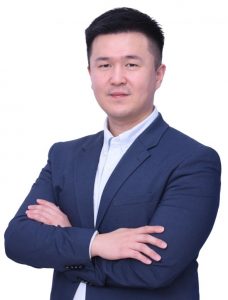
Chee Eng Chan
Consultant nephrologist from Kuantan, Malaysia, with a special interest in glomerular diseases.
Can you tell us about your work in kidney care?
I established a dedicated glomerular disease clinic at Hospital Tengku Ampuan Afzan, the public hospital where I work. The clinic provides focused care for patients with a wide range of glomerular diseases, from relatively straightforward cases to complex and rare conditions.
What challenges do young kidney care professionals face in your region?
One of the biggest challenges is limited access to advanced subspecialty training, as well as limited opportunities for international collaboration, research, and leadership.
What do you hope to contribute to the YNC?
Having benefited from ISN initiatives myself, I hope to strengthen the global network of young nephrologists and develop high-quality educational programs that respond to the needs of early-career kidney care professionals.
Additional credentials
- ISN Fellow in glomerular diseases (2024–2025)
- Core member of the Malaysian Society of Nephrology Rare Kidney Disease Group

Priti Meena
Assistant professor, Department of Nephrology at AIIMS Bhubaneswar, India.
Can you tell us about your work in kidney care?
My work combines clinical nephrology, research, and medical education, with particular interests in chronic kidney disease (CKD) of uncertain etiology, pregnancy-related kidney injury, glomerular diseases, and tropical acute kidney injury (AKI). I also lead multicenter research collaborations and mentor nephrology fellows and early-career researchers.
What challenges do young kidney care professionals face in your region?
A major challenge is delivering high-quality kidney care in resource-constrained health systems where patients may face delayed diagnosis or limited access to treatment because of financial barriers. Young nephrologists also need greater access to research funding, mentorship, regional registries, and collaborative networks that can generate evidence relevant to South Asia.
What do you hope to contribute to the YNC?
I hope to strengthen collaborative research, education, and mentorship for early-career nephrologists, particularly in South Asia and other low- and middle-income regions. Drawing on my experience with multicenter research networks and registries, I would like to support research capacity building, scientific writing, and leadership and grant development, while promoting greater representation and access to practical, locally relevant educational resources.
Additional credentials
- ISN Emerging Leaders Program member (2024–2026)
- Institutional Ethics Committee of AIIMS Bhubaneswar member
- Founding member and principal coordinator of the Indian Pregnancy-Related Acute Kidney Injury (IPRAKI) Network
- Author of over 80 PubMed-indexed publications and associate editor of the Indian Journal of Nephrology
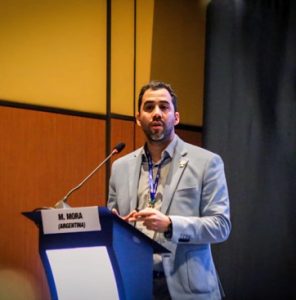
Mauri Mora
Head of the Nursing Education Department at Clínica Regional del Sud, Río Cuarto, Córdoba, Argentina.
Can you tell us about your work in kidney care?
I am a registered nurse with 10 years of experience in nephrology, working in nursing education, training, and strategic planning. My research focuses on early CKD detection and the role of nursing in improving and humanizing care.
What challenges do young kidney care professionals face in your region?
Argentina needs more equitable access to trained kidney care professionals across its regions. Nephrology training for nurses is developing, but further progress is needed, alongside stronger primary care approaches to early CKD detection.
What do you hope to contribute to the YNC?
I hope to bring a nursing perspective from Argentina and the wider region, while helping strengthen connections between the ISN and kidney care professionals in Latin America. I would also like to contribute my experience in education and research, particularly around early CKD detection and improving and humanizing kidney care.
Additional credentials
- Leader of the Nursing Committee of the Society of Nephrology and Hypertension of Córdoba
- Member of the board of directors of the Nursing Committee of the Latin American and Caribbean Transplant Society
- Nephrology research lead within the primary health care system in Río Cuarto
- Teaching and Research Committee member at the largest clinic in Córdoba: Clínica Regional del Sud in Río Cuarto
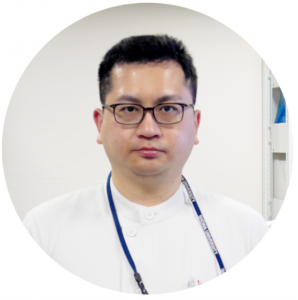
Hirohito Sugawara
Assistant professor at the Department of Nephrology at Showa Medical University Northern Yokohama Hospital, Japan.
Tell us about your work in kidney care.
My clinical work spans CKD, dialysis, and the transition to kidney replacement therapy with a particular focus on cardiovascular complications. My research explores cardio-kidney interaction and practical ways to assess cardiovascular risk in people with CKD and those receiving dialysis. I also teach and supervise younger physicians.
What challenges do young kidney care professionals face in your region?
Young kidney care professionals in Japan face growing clinical demands as they care for an aging population with CKD, cardiovascular disease, frailty, and complex social needs. Heavy workloads can limit time for research and professional development, while language barriers and minimal exposure to international networks can make initiating and presenting research or participating in global initiatives more difficult.
What do you hope to contribute to the YNC?
I hope to build stronger connections between young nephrologists in Japan and the wider international kidney community. I would like to contribute my experience in cardio-kidney research and clinical databases to collaborative projects and practical research training, while helping make international mentorship, research, and ISN activities more accessible to young professionals in Japan.
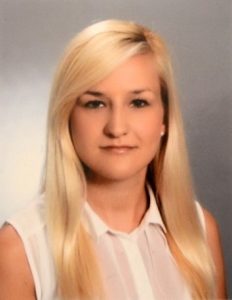
Alma Mutevelic-Turkovic
Nephrologist from Bosnia and Herzegovina.
Can you tell us about your work in kidney care?
I work as a consultant nephrologist, caring for patients with CKD, acute kidney injury, glomerular diseases, hypertension, and those requiring hemodialysis. Alongside clinical care, I am involved in research and medical education, with interests in CKD, epidemiology, kidney replacement therapy outcomes, and interventional nephrology. I also teach physiology to medical students and enjoy mentoring younger colleagues and students.
What challenges do young kidney care professionals face in your region?
Working in a healthcare system with limited resources can be a challenge for young nephrologists seeking to develop their skills, pursue research, and access professional development.
What do you hope to contribute to the YNC?
I hope to bring the perspective of a young nephrologist from Southeast Europe and contribute to education, research collaboration, and professional development initiatives. I would also like to strengthen connections between the ISN and young nephrologists in my region, helping more colleagues engage with international opportunities and networks. I am equally eager to learn from and collaborate with colleagues around the world to advance kidney care globally.
Additional credentials
- National representative for Bosnia and Herzegovina within the ERA Young Nephrologists’ Platform
- PhD candidate in nephrology
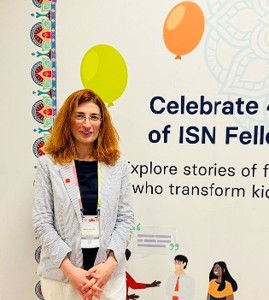
Nora Sarishvili
Invited lecturer at Tbilisi State Medical University and nephrologist from Georgia.
Please tell us about your work in kidney care.
My clinical interests include acute kidney injury, critical care nephrology, and kidney transplantation. Alongside clinical practice, I participate in international clinical research studies and nephrology education initiatives, teaching medical students and mentoring residents and young nephrologists.
What challenges do young kidney care professionals face in your region?
A key challenge in Georgia is the limited development of critical care nephrology. Structured training and access to continuous kidney replacement therapies remain limited, and nephrologists are not always involved early in multidisciplinary ICU care. Strengthening specialist training and collaboration between intensivists and nephrologists is an important priority.
What do you hope to contribute to the YNC?
I hope to bring the perspective of young nephrologists from Georgia and the wider NIS region and use my experience in education, mentoring, and professional networks to improve access to opportunities. I would particularly like to support mentorship, leadership development, international collaboration, and greater participation of professionals from underrepresented regions in ISN activities.
Additional credentials
- ISN NIS & Russia Regional Board member (2018–present)
- Dialysis, Nephrology and Kidney Transplantation Union of Georgia member (2023–present)
- ISN Fellow (2016–2017)
The ISN looks forward to seeing the ideas, perspectives, and energy these dedicated YNC members bring to the committee over the next two years.