
ISN Journal summaries on B cell-targeting immunotherapies and eGFR slope in the cardiorenal continuum
Kidney International®
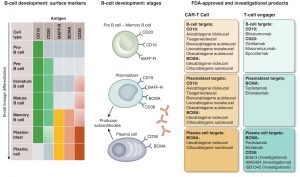
Tiny warriors, big impact: targeted immunotherapy in kidney diseases
This review examines whether emerging B cell-targeting immunotherapies, particularly chimeric antigen receptor T-cell therapy and T-cell engagers, could improve outcomes in autoimmune kidney diseases where current treatments often fail.
It summarizes early evidence, mainly from small uncontrolled studies in systemic lupus erythematosus, suggesting these approaches may achieve deeper B-cell depletion and durable remission, including kidney involvement.
The authors suggest that these therapies are promising but remain experimental in kidney disease, with limited data on kidney-specific outcomes and important safety concerns; for now, their use is best considered in controlled clinical trials or highly specialized settings.
Kidney International Reports®
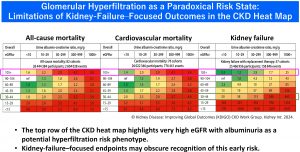
The next-generation CKD heat map: hyperfiltration and eGFR slope in the cardiorenal continuum
This editorial argues that current chronic kidney disease (CKD) risk staging may miss early high-risk patients because it relies mainly on static snapshots of estimated glomerular filtration rate (eGFR) and albuminuria.
It proposes adding two dynamic dimensions, hyperfiltration and eGFR slope, to better explain why some people with very high eGFR still face elevated kidney and cardiovascular risk.
The key takeaway is that very high eGFR, especially when combined with albuminuria or cardiometabolic stress, may be a warning sign rather than reassurance. A next-generation CKD heat map incorporating these measures could support earlier detection, prevention, and treatment.