Turning shared priorities into structured, sustainable progress: CARE-NEPH in action
“With this initiative, we shall be able to train at least two nephrologists every year and create a platform for other institutions to take up the mantle.”
CARE-NEPH East Africa* was launched in answer to a simple question: What becomes possible when training, institutional partnerships, and leadership development are coordinated rather than delivered separately? In East Africa, that approach is already creating new opportunities in kidney care.
By aligning national leadership, ISN Grants, and capacity-building initiatives across Kenya, Uganda, Ethiopia, and Tanzania, CARE-NEPH helps translate shared priorities into more structured, sustained progress. Early experiences from across the region highlight how this coordinated approach is beginning to take shape on the ground.

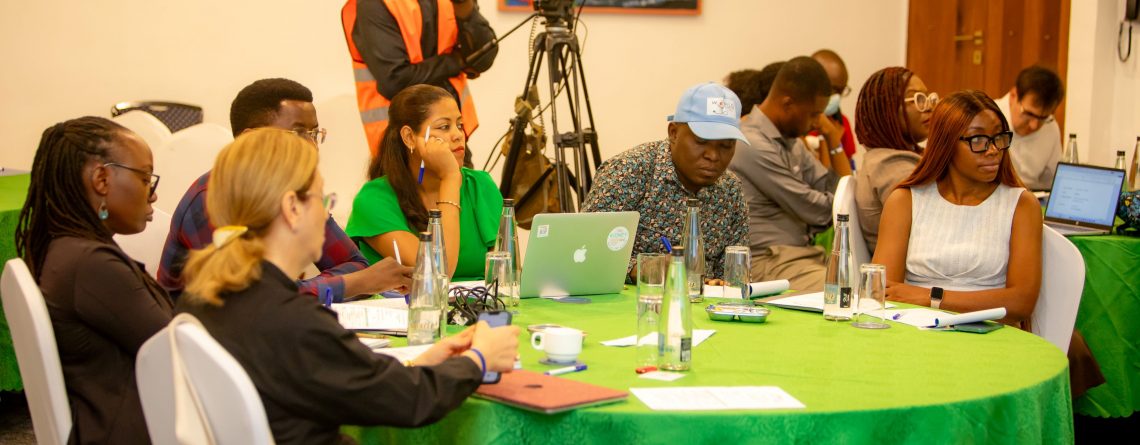
Participants at the ISN Scientific Writing Course in Mombasa, Kenya, October 2025
Addressing regional and national gaps in kidney care
While regional challenges are shared, country-level priorities highlight how gaps manifest differently across health systems. In Uganda, these include more structured support for early-career nephrologists and the development of sustainable programs, including conservative kidney management.
In Kenya, key issues include difficulties implementing chronic kidney disease prevention programs, pressure on hemodialysis funding, and underdeveloped services in transplantation, peritoneal dialysis, and renal pathology.
According to CARE-NEPH country lead for Tanzania, Sudakshina Ghosh, the nephrology landscape in Tanzania is evolving, with growing demand to strengthen nephropathology expertise and services, which will improve diagnostic capabilities for glomerular diseases. There is potential to establish continuous ambulatory peritoneal dialysis, which is currently not available, as well as a need to enhance interventional nephrology services and advance onconephrology, paving the way for broader and more comprehensive patient care.

Sudakshina Ghosh, country lead for Tanzania
In Ethiopia, priorities include strengthening specialist training for nurses and dialysis service expansion. CARE-NEPH country lead for Ethiopia, Lissane Seifu, emphasizes the initiative’s importance in helping bridge these gaps, noting, “The ISN provides good opportunities and has the right commitment for the advancement of kidney care in resource-limited countries.”

Lissane Seifu, country lead for Ethiopia
Building capacity through regional collaboration
All CARE-NEPH country leads reported increased national and regional collaboration through the initiative. Peace Bagasha, country lead for Uganda, states: “CARE-NEPH has helped strengthen East African collaboration, with colleagues working together more closely than before, including alongside AFRAN to co-develop multiple educational initiatives and training opportunities that reflect growing momentum and shared commitment across the region.”

Peace Bagasha, country lead for Uganda
In 2024, the ISN CME Program supported the East African Nephropathology Workshop. In 2025, the ISN Primer Course in Glomerular Diseases was held, with both events taking place in Nairobi. In October 2025, a Scientific Writing Course in Mombasa brought together participants from across the region, while a CME Program-supported POCUS workshop in Nairobi expanded practical diagnostic capacity. All four events were organized in partnership with the Kenya Renal Association.
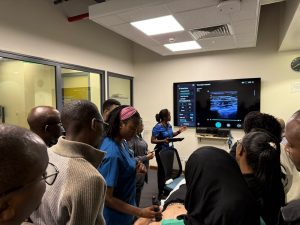
Participants at the CME Program-supported POCUS workshop in Nairobi, Kenya, October 2025
Regional support has already helped develop a curriculum for an in-country adult nephrology fellowship training program in Uganda, now under review, with plans to launch in 2027.
As Dr. Bagasha notes, “This is a major milestone for Uganda and would not have been possible without the support of partner leads. Uganda has currently only been able to produce one nephrologist every two years despite a population growth rate of over 1.2 – 1.6 million births per year. With this initiative, we shall be able to train at least two nephrologists every year and create a platform for other institutions to take up the mantle.”
This collaborative momentum is also reflected in the work of the ISN Regional Training Center at the East Africa Kidney Institute in Kenya. which is now partnering with colleagues in Uganda, Tanzania, and Ethiopia to support future training workshops. Plans are also already underway for other shared initiatives, including a conservative kidney management pre-conference course in Tanzania in 2027.
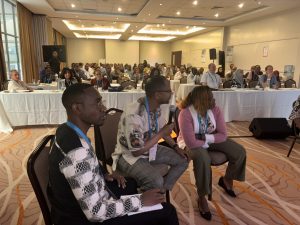
Participants at the ISN Primer Course in Glomerular Diseases in Nairobi, Kenya, May 2025
Immediate impact
The CARE-NEPH initiative is starting to yield tangible progress. Successful applicants from CARE-NEPH countries are rising in number across ISN Grants, including four ISN Fellows (two from Uganda, one from Tanzania, and one from Kenya) and new or upgraded Sister Renal and Transplant Center partnerships in Ethiopia, Uganda, and Tanzania. Two candidates from Ethiopia applied and were selected for the ISN Renal Pathology Bursaries.
In Tanzania, Dr. Ghosh hopes to build on this momentum to coordinate more Sister Center partnerships and Continuing Medical Education meetings tailored to local needs. She also sees opportunities to establish an ISN Regional Training Center in the country and increase the number of nephrology fellows and nephropathologists.
In Kenya, workshops delivered through ISN Grant programs and aligned under CARE-NEPH are shaping clinical practice and professional priorities. According to CARE-NEPH country lead Jonathan Wala, training in glomerulonephritis and renal pathology has had an immediate impact, refocusing the nephrology community on the importance of identifying, diagnosing, and managing glomerular disorders. He noted the training had “re-ignited the desire to adequately evaluate kidney disorders, with more kidney biopsies being done. The younger nephrologists have taken more interest in discussing the histology findings with renal pathologists, both locally and abroad. A case in point is the increasing number of IgA nephropathy cases being diagnosed, in a population where it was previously thought to be unheard of.”
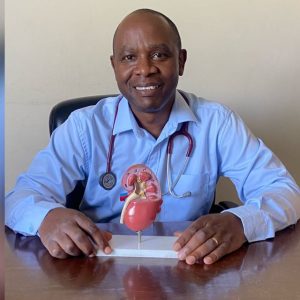
Jonathan Wala, country lead for Kenya
In Ethiopia, CARE-NEPH is helping develop to build capacity and more structure within kidney care services. An interventional nephrology training is planned for May 2026, while progress is also being made on an ISN Sister Renal Centers application and a dialysis registry. In addition, discussions with the Ministry of Health have begun to set up a national kidney project. Dr. Seifu explains, “We think that this project will have a big impact on Ethiopia’s kidney care, making it more structured, sustainable, and of a higher standard. We are so grateful to the ISN.”
Looking ahead Country leads see continued collaboration, training, and stronger data generation as central to sustaining progress.
As Dr. Bagasha reflects, “The progress seen so far highlights the value of shared expertise, mentorship, and regional cooperation. Sustained global support will be key to building resilient kidney care systems and ensuring equitable access to care in settings like Uganda.” Dr. Wala adds, “With partnerships and collaborations, kidney care challenges become unique opportunities to administer tailor-made local solutions.”
As CARE-NEPH advances, the ISN remains committed to supporting the initiative, led by national leads, and which is helping to build stronger, more sustainable kidney care systems in the region through local expertise, shared learning, and cross-border collaboration.
* The “Capacity Accelerator for Regional Empowerment in NEPHrology – East Africa” Project (CARE-NEPH East Africa Project) is a five-year initiative led by the Kenya Renal Association, the Uganda Kidney Foundation, the Ethiopia Kidney Association, and the Nephrology Society of Tanzania.