From implementing global kidney health commitments to results of the Phase 2 ACTION2 trial: Read the latest ISN Journal summaries
Kidney International®
Chronic kidney disease (CKD) affects 850 million people globally, with the highest burden in low- and middle-income countries. The WHA78 kidney health resolution offers a unique opportunity to advance prevention and care.
This editorial presents case studies from Guatemala, Thailand, and Somalia showing early steps: Creating national kidney strategies, integrating CKD care into primary care, and strengthening health data systems.
These efforts illustrate how global commitments can be translated into practical actions to improve kidney health and equity worldwide.
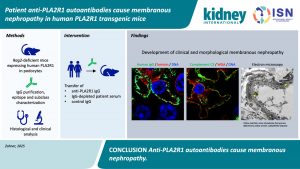
Patient anti-PLA2R1 autoantibodies cause membranous nephropathy in human PLA2R1 transgenic mice
Membranous nephropathy (MN) is an autoimmune kidney disease associated with anti–phospholipase A2 receptor 1 (PLA2R1) autoantibodies, but their direct pathogenicity remained unclear.
This study purified IgG from patients with PLA2R1-associated MN and injected it into immunodeficient mice expressing human PLA2R1 in podocytes. Mice receiving patient-derived anti-PLA2R1 IgG developed proteinuria, glomerular IgG and complement deposition, and podocyte damage, whereas controls did not.
These results demonstrate that anti-PLA2R1 autoantibodies are directly pathogenic, supporting therapies aimed at reducing their levels.
Kidney International Reports®
From dialysis to destinations: Safe travel strategies for patients with CKD
Patients with chronic kidney disease (CKD) and kidney failure face significant challenges when traveling due to treatment schedules, medical complexity, and increased risk of cardiovascular, thromboembolic, and infectious complications.
This review outlines travel-related risks for hemodialysis and peritoneal dialysis patients and provides practical strategies, including pre-travel assessment, medication and supply management, international dialysis coordination, and inflight precautions.
With careful planning and technological advances in dialysis, safe travel can be made more accessible, supporting patients’ mobility, independence, and quality of life.
Focal segmental glomerulosclerosis (FSGS) is a leading cause of nephrotic syndrome and kidney failure, with limited treatment options and a high unmet need for therapies that safely reduce proteinuria.
The Phase 2 ACTION2 trial tested DMX-200 (repagermanium), a C-C chemokine receptor 2 pathway inhibitor, in combination with stable angiotensin receptor blocker therapy.
The study found that DMX-200 was well tolerated and, together with preclinical evidence, supports further investigation into its long-term efficacy in reducing proteinuria and preserving kidney function in patients with FSGS.