“An important role disseminating kidney science across the globe”: Celebrating 10 years of Kidney International Reports®
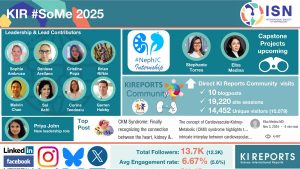
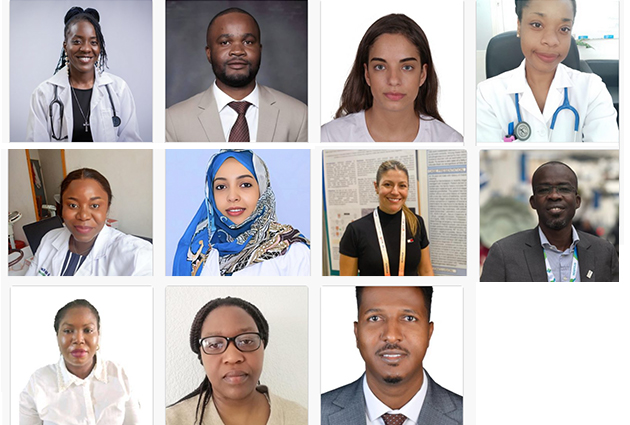
Visual featured in the KIR editorial on its 10th anniversary
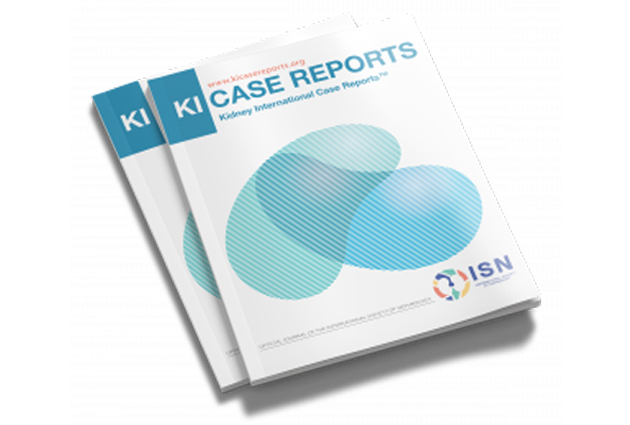
To mark 10 years of the ISN Journal Kidney International Reports® (KIR), we spoke with Editor-in-Chief Jai Radhakrishnan and Deputy Editor Sumit Mohan about the journal’s origins, defining moments, and how its mission has evolved over the past decade.
Creating a home for open-access kidney research
When KIR launched in 2016, it aimed to address a clear unmet need in nephrology publishing. “KIR was created to fill a gap: a high-quality, fully open-access home for clinical and translational nephrology research for the global kidney care community,” they explain. From the outset, the vision was to democratize access to kidney science — particularly for clinicians and investigators without subscription access.
That vision has guided the journal’s evolution. What began as a companion publication has grown into a global platform spanning clinical trials, implementation science, health disparities and health services research, along with important and rigorous observational studies. Alongside this expansion, KIR has strengthened its editorial processes, broadened article types, enhanced statistical reviews, and built a more diverse editorial board representing regions across the world.
Milestones that defined a decade
Looking back, the editors point to several moments that defined KIR’s trajectory. The first issue in 2016 arrived with what they describe as a “slow trickle” of submissions that has grown steadily year after year. Early indexing and citation successes followed, but the true measure of impact came later:
“The first time we saw KIR papers cited in guidelines and policy documents and saw our visual abstracts and publications being included in conference presentations was especially meaningful,” they recall. During the COVID-19 pandemic, the journal experienced a rapid surge in both submissions and readership, reinforcing its role as a trusted, openly accessible source of clinically relevant evidence during a global health crisis during which the science was evolving at a rapid pace.
Taking risks that paid off
Some of KIR’s most defining characteristics stem from early decisions that felt risky at the time. The editorial team intentionally adopted a broad scope, welcoming research in implementation science, quality improvement, education, study design, and health systems — areas often overlooked by other journals. The editors recognized early that they wanted to be the journal that helped move the field forward across the globe by helping inform care and facilitating contributions to science more broadly.
It was a deliberate choice to push firmly into global kidney care. “We made a conscious decision to invite work from underrepresented regions and practice settings, even when the traditional impact on citation metrics was uncertain,” the editors note, “In retrospect, those decisions helped define KIR’s identity and are now among the achievements we are most proud of.”
A global platform for kidney science
From early on, the editors recognized that KIR had a responsibility beyond traditional publishing. There was, they say, “an early recognition that we had an important role in disseminating kidney science across the globe.” That commitment — to equity, representation, and access — remains central to the journal today.
Ten years on, Kidney International Reports® stands as a testament to the value of open access, editorial rigor, and global inclusivity. As the journal looks to the future, it continues to support the ISN’s mission — to advance kidney health worldwide, together — by ensuring that high-quality kidney research can be accessed, shared, and applied wherever care is delivered.
10 years of KIR: Stories and insights ahead
Throughout 2026, ISN will continue to mark this milestone with a series of articles exploring different facets of KIR’s trajectory. Topics will include the role of novel application of digital tools such as podcasts and social media in connecting the kidney community, the potential of AI, data sharing, and open science to reshape nephrology publishing, and reflections from the editorial team on lessons learned and priorities for the next decade.